Category

Minoan/Mycenaean

Excavation Sites for Prehistoric and Ancient Female Figurines

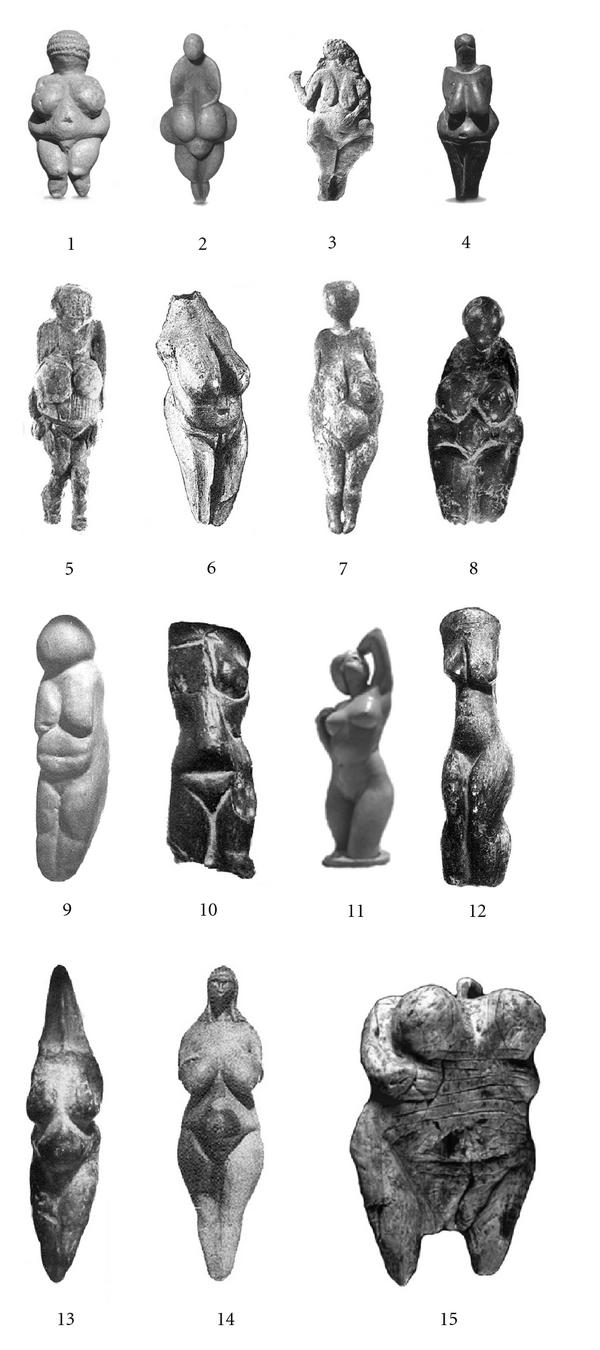
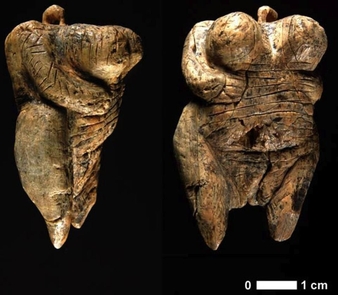
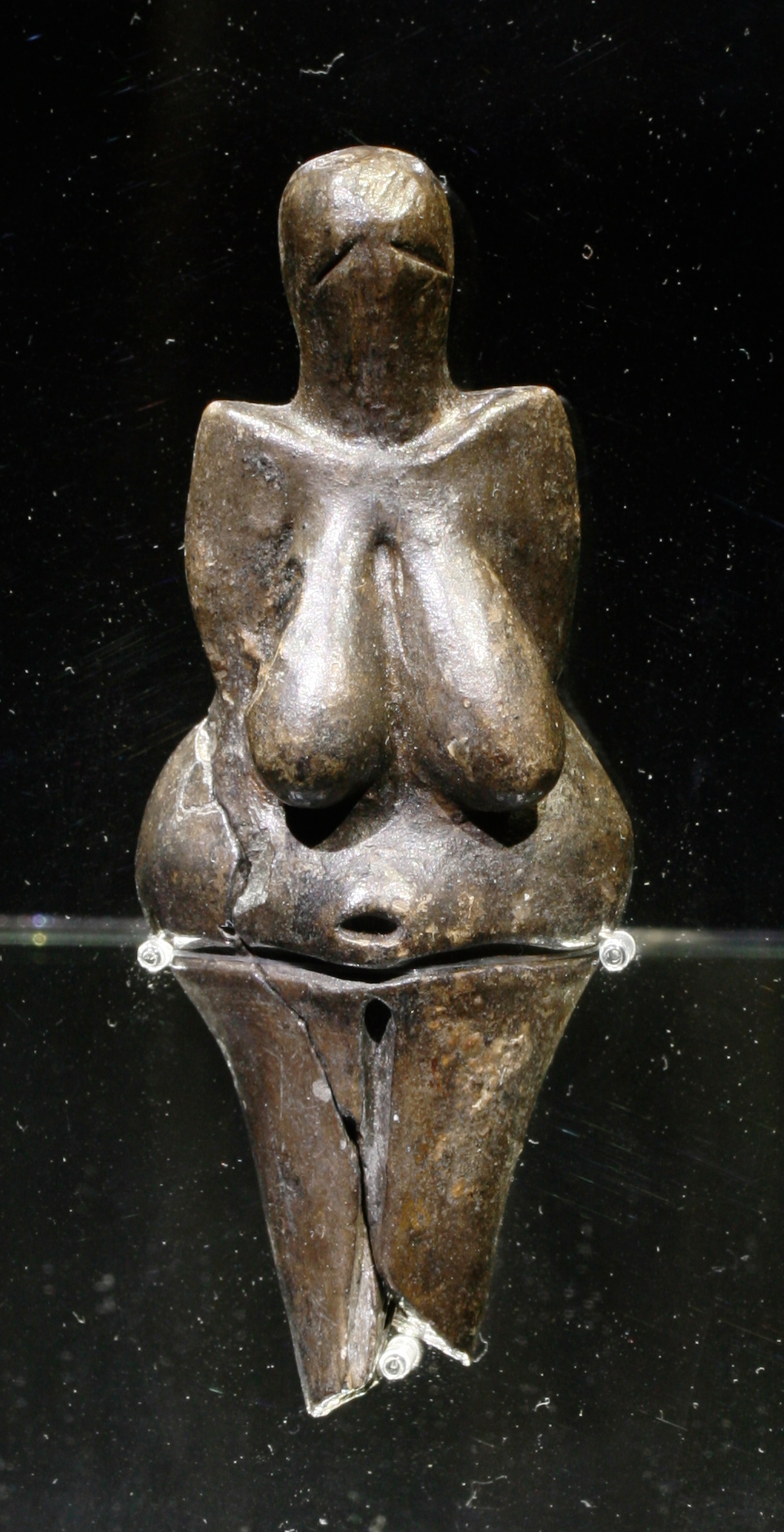
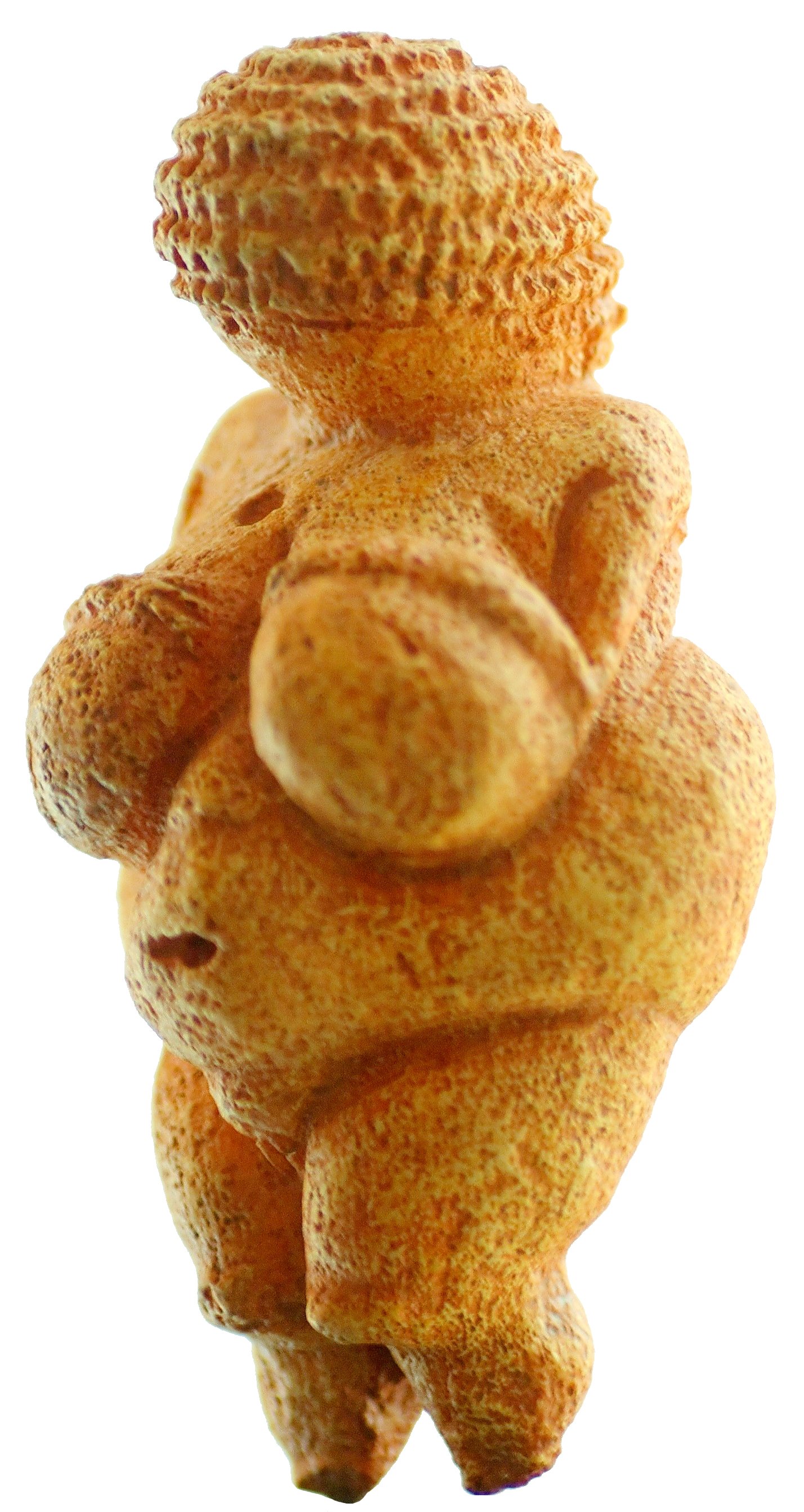
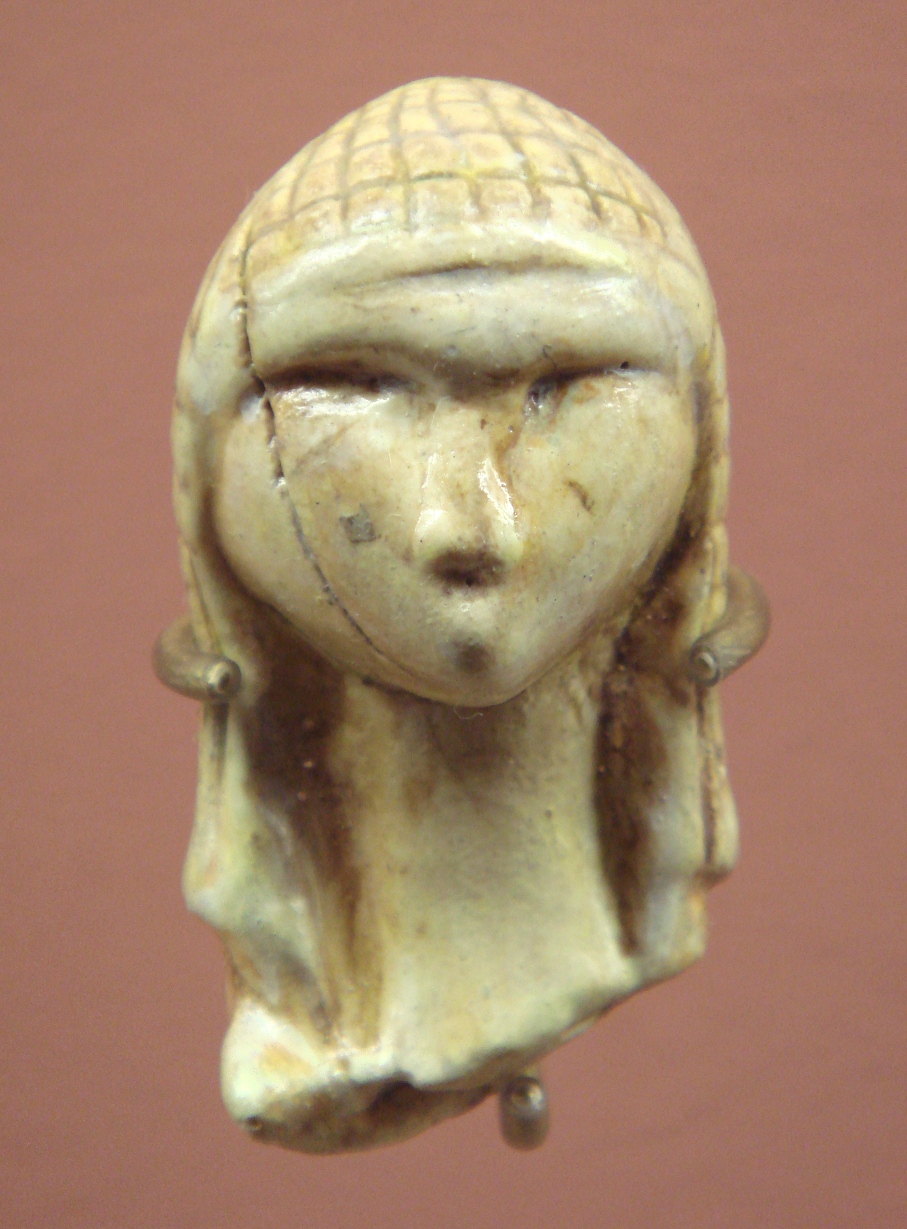
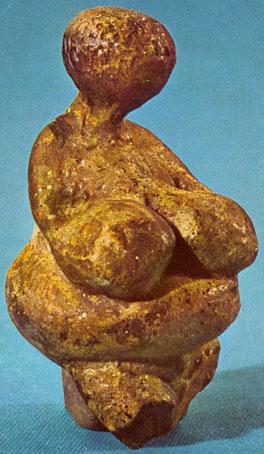
Various (mostly) prehistoric "Venus" figurines. (1) Willendorf’s Venus (Rhine/Danube), (2) Lespugue Venus (Pyrenees/Aquitaine), (3) Laussel Venus (Pyrenees/Aquitaine), (4) Dolní Věstonice Venus (Rhine/Danube), (5) Gagarino no. 4 Venus (Russia), (6) Moravany Venus (Rhine/Danube), (7) Kostenki 1. Statuette no. 3 (Russia), (8) Grimaldi nVenus (Italy), (9) Chiozza di Scandiano Venus (Italy), (10) Petrkovice Venus (Rhine/Danube), (11) Modern sculpture (N. America), (12) Eleesivitchi Venus (Russia); (13) Savignano Venus (Italy), (14) The so-called “Brassempouy Venus” (Pyrenees/Aquitaine), (15) Hohle Fels Venus (SW Germany). Image from article, "Venus Figurines of the European Paleolithic: Symbols of Fertility or Attractiveness?" by Alan F. Dixson and Barnaby J. Dixson (2011).

Yesterday I had a student ask about the excavation sites for so-called “Venus” figurines from the Paleolithic period. This student wondered if the physical location of the site (or the other objects excavated at the sites) could give us more understanding about how the “Venus” figurines originally functioned. I thought this was a great question. Although I knew that some figurines were found in caves or domestic sites, I thought that I would find more information about the specifics regarding the excavation sites and findings.

I didn’t find nearly as much information as I had hoped (there may be more information hidden away in technical archaeology journals), but I did pull together a few interesting finds. It is interesting to see how several figurines are associated with domestic sites or found alongside animal bones. Would these bones have been food for these people or sacrifices for religious rituals? Perhaps both? Other female figurines are found in caves, sometimes with other objects and animal bones, too.

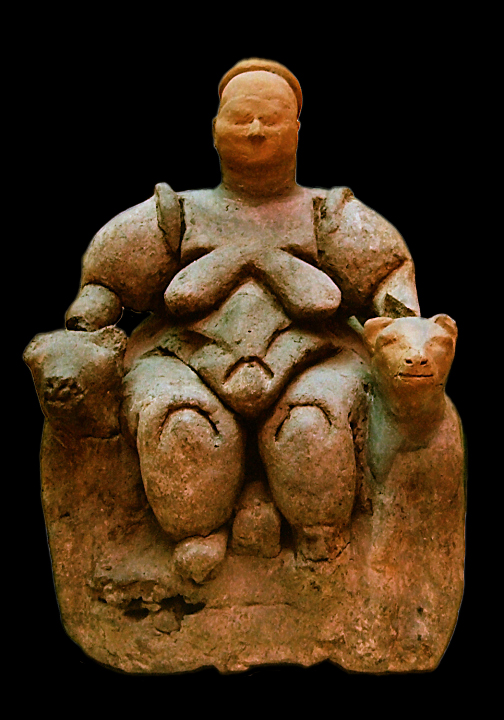
I know that the following list isn’t comprehensive by any means. (I also threw a Neolithic and a Minoan female figurine in the list, just to make things fun.) I plan on adding to this list as I come across new information and findings. If you want to add a another figurine to the list, or more details regarding the excavation of these figurines, feel free to leave a comment!

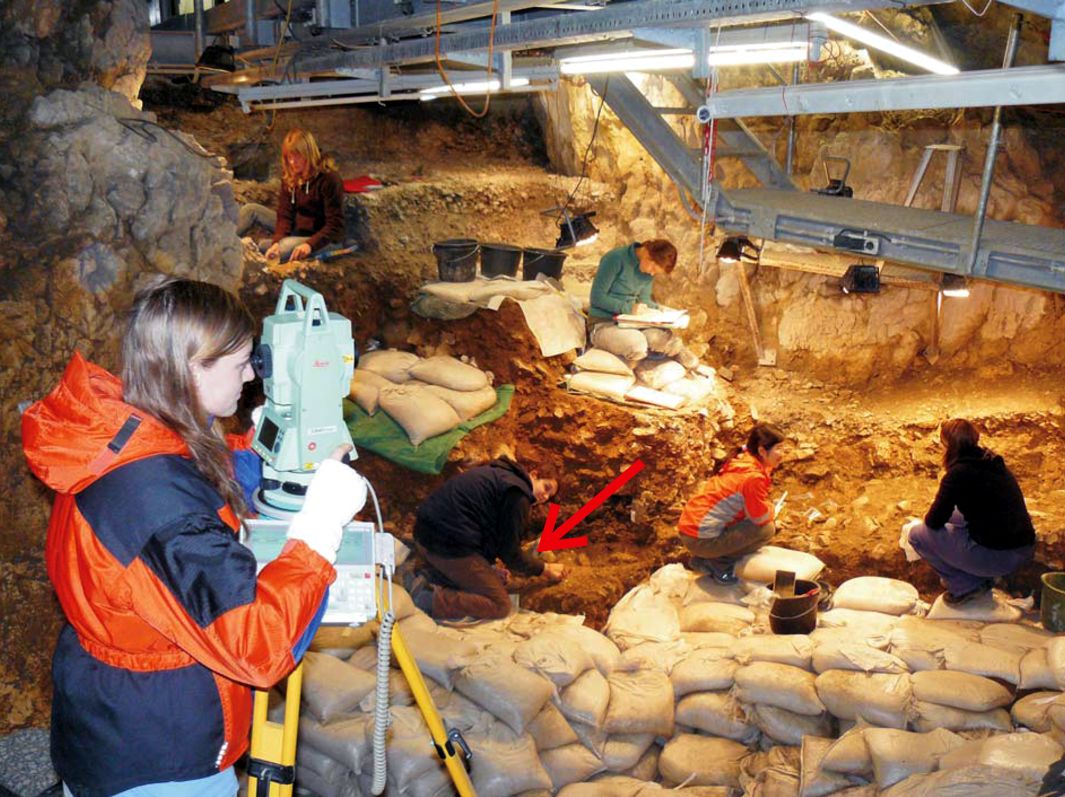
Photograph of the Hohle Fels Cave. Red arrow indicates where the "Venus" of Hohle Fels was discovered in September 2008.

  • Venus of Hohle Fels (at least 35,000 BCE) : Excavated in September 2008 in the Hohle Fels cave in Germany (see image above). The figurine, which was carved from a mammoth’s tusk, was discovered in six fragments. A flute was also discovered at this site, which currently is the oldest known instrument in the world.
  • Venus of Dolní Věstonice (29,000 − 25,000 BCE): Discovered in 1925 in a layer of ash. The figurine was broken into two pieces. Figures of animals, as well as 2,000 balls of burnt clay, have been found at the Dolni Vestonice site. The majority of these finds were located at the dugout of central fire pit at the site.
  • Venus of Laussel (20,000 − 18,000 BCE): Discovered in 1911 by physician J. G. Lalanne. The figure is found in a rock shelter, carved onto a piece of fallen limestone.
  • Venus of Willendorf (28,000 − 25,000 BCE): Excavated in 1908 by Josef Szombathy in a loess deposit (fine-grained material that has been transported by the wind). More technical information about the excavation and layer deposit is found here.
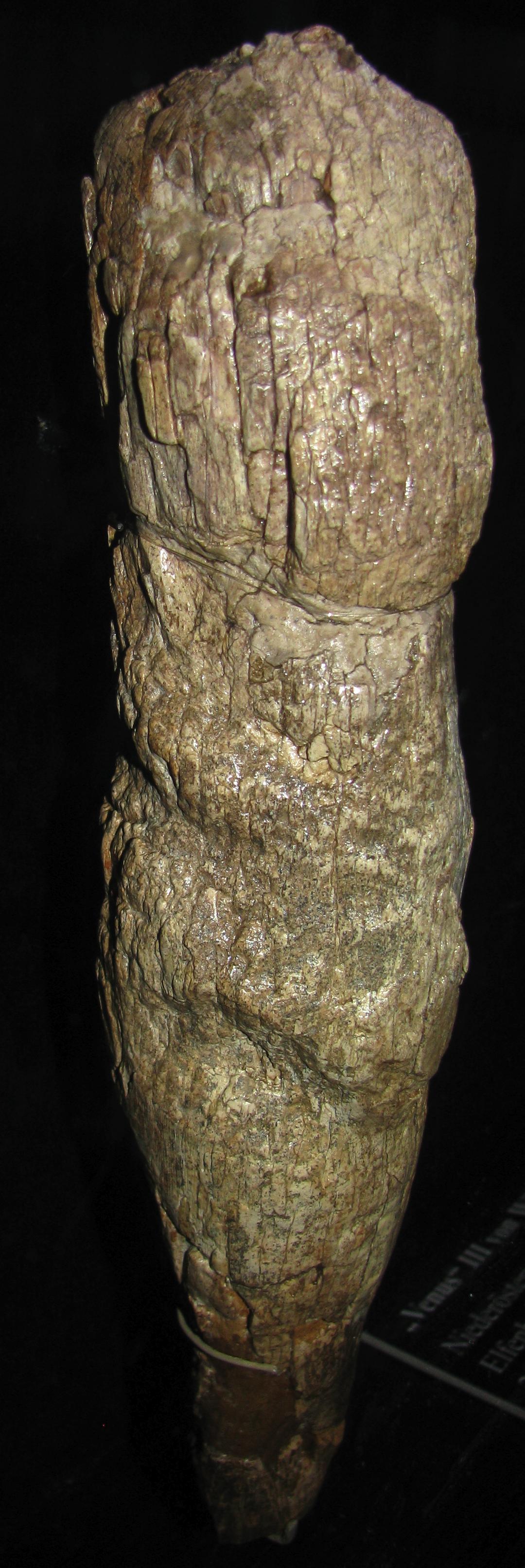
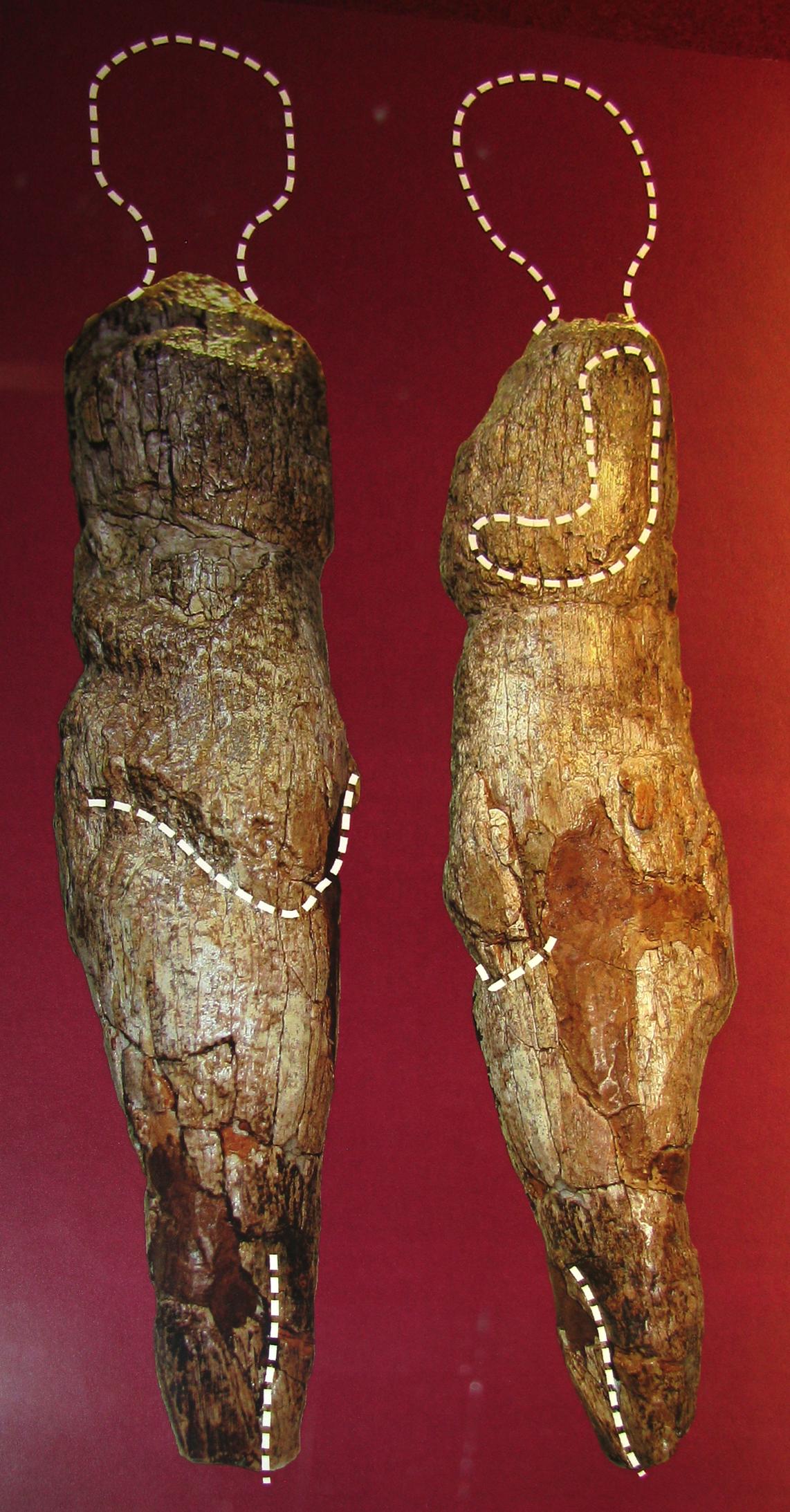
  • “Venus II” from Willendorf (see suggested reconstruction here): Discovered in 1926 by Joseph Bayer. This figurine was found in a pit, lying on top of the jaw of a mammoth. This figurine is probably older than the “Venus of Willendorf.” The deep pit where “Venus II” was found went from level nine to level five. The original “Venus” of Willendorf was excavated at level nine.
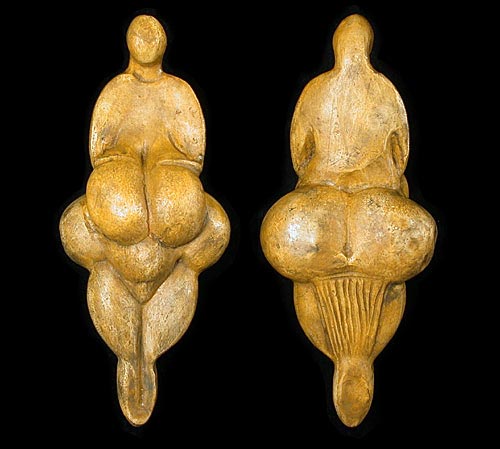
  • Venus of Lespugue (24,000 − 22, 000 BCE): Discovered in the cave of Lespugue in 1922.
  • Gagarino Venus (c. 20,000 − 1,700 BCE): Excavated between 1926-1929. These figures were found in a house pit. The walls of the pit were lined with rhinocerous and mammoth bones.
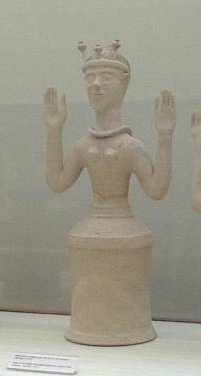
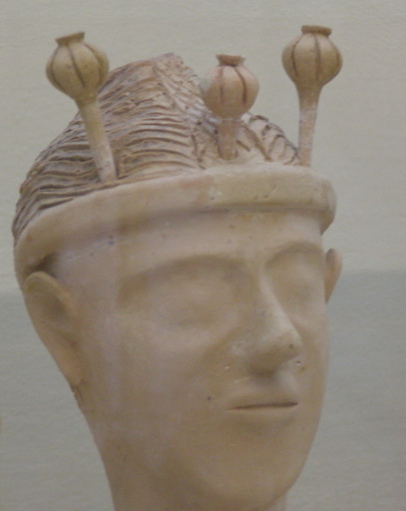
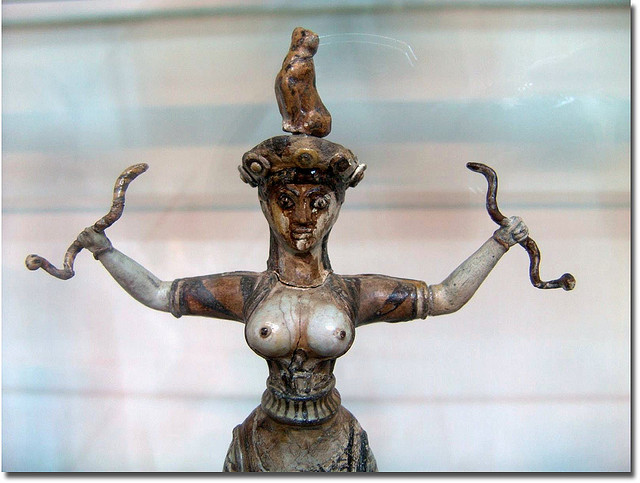
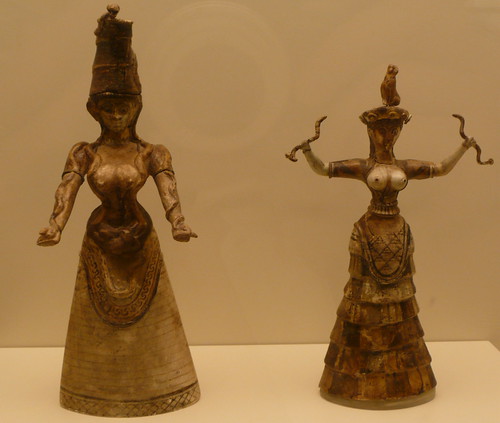
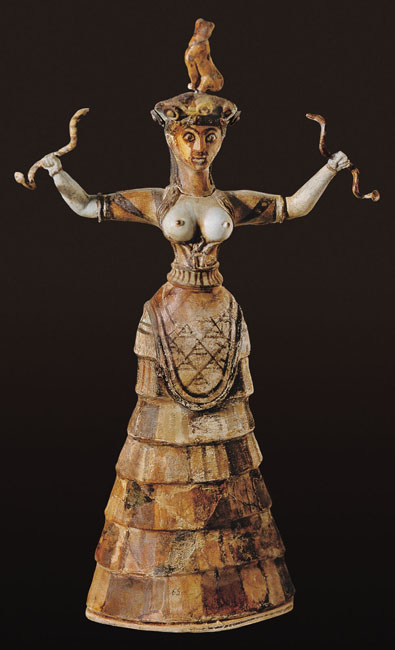
  • Minoan “Snake Goddess” (c. 1600 BCE): Discovered in 1903 by the British archaeologist Sir Arthur Evans. One of the “snake goddess” figurines was located at the “palace” of Knossos in a cist (repository) on the floor of a small room (near the “Throne Room” and “Room of the Charior Tables”). Sir Arthur Evans believed that this snake goddess (and the other objects found in the cist) formed part of a cult shrine. Evans identified the figurine traditionally identified as a “Snake Goddess” in art history textbooks as a votary of the snake goddess.
— 4 Comments

Snakes in Ancient Art Hiss-tory

Each of my classes this quarter has its own distinct personality. My ancient art students are especially curious, and I love the questions that they raise in class. And for some reason, a lot of our recent topics have meandered (or perhaps slithered?) toward a discussion of snakes. I suppose this shouldn’t be surprising, since snakes held symbolic significance in a lot of ancient cultures. Here are some of the works that we have been discussing at length (and some topics that we’ll be discussing in the next few weeks):

I can’t even express how much I love the Minoan Snake Goddess (shown left, c. 1700-1550 BCE, image courtesy Flickr via Xosé Castro). This was one of the first statues that I loved as an AP art history student in high school. A few weeks ago, my students and I discussed how the snake could have held multiple symbolic associations for the Minoans. Snakes are associated with rejuvenation in many ancient Mediterranean cultures, since snakes can rejuvenate themselves by shedding their skin. Snakes are also associated with resurrection, since they can move both above and beneath the ground.

Last week, when discussing Hellenistic art, a student asked why Alkyoneos (depicted in part of the Gigantomachy frieze at the Altar of Zeus, Pergamon, c. 175-150 BCE) was entwined with a snake. (We were also looking at another Hellenistic sculpture, the Laocoön (1st century BC), and the student noticed a visual similarity between the writhing snakes.) I had never paid attention to the Alkyoneos snake before, but discovered that the snake helps the viewer to identify that Alkyoneos is battling with the Olympian goddess Athena. The snake aids Athena in her victory, similar to how serpents aid the Olympian gods (specifically Athena, according to some accounts) in the killing of Laocoön, the Trojan priest.

Athena was often identified with snakes (I joked with my students that she might have been a Parselmouth). Not only was the snake associated with wisdom (which was one of Athena’s attributes), but snake also served as the symbol for Erectheus, the mythical king of Athens. As the patron goddess of Athens, it makes sense that Athena would also be associated Erectheus (and Athens) through the snake symbol. Athena was depicted with a snake in the monumental “Athena Parthenos” statue by Phidias (original dated 438 BC, see reconstruction from Royal Ontario Museum here).

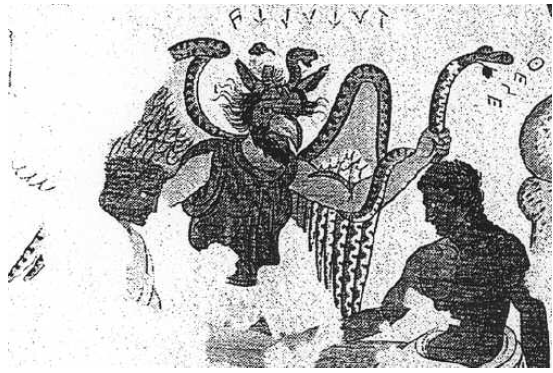
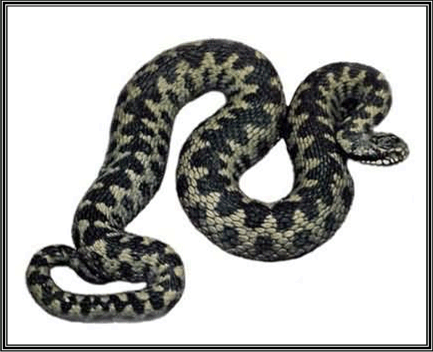
In about a week, I’ll be talking about snakes with my ancient art students again, this time in connection with the Etruscans. Scholar Kristen Lee Hostetler recently explored how snake imagery is found in depictions of Etruscan demons (such as the wall painting of the demon Tuchulcha, Tomba dell’Orco II, Tarquinia, last quarter of the 4th century BC; shown left). It appears that snakes (specifically the extremely poisonous adder) were feared by the Etruscans. Hostetler points out that the distinct adder markings are noticeable in the demon imagery1. In addition, some of these Etruscan demons have blue flesh (as seen in the “Tomb of the Blue Demons” in Tarquinia, late 5th – early 4th century BC), which is reminiscent to the skin discoloration caused by an adder snakebite.2

Earlier in the quarter, my students and I have discussed the significance of the enraged uraeus snake in Egyptian pharaonic imagery (as can be seen in the funerary mask of King Tutankhamun, c. 1327 BCE). The snake is a reference to the Wadjet, the cobra goddess of Lower Egypt. According to mythology, the pharaoh sat at coronation to receive his crown from this goddess.3 The cobra was one of the earliest of Egyptian royal insignia.

Do you have a favorite work of art which includes snake imagery? It’s interesting that snakes have obviously fascinated (and intimidated) the human race for so many centuries. I can think of many other examples, even extending outside the realm of ancient art. Biblical images of Eve with snakes have been popular in Christian art for centuries. Snakes can also appear in conjunction with the Virgin; my favorite Baroque example is Caravaggio’s Madonna with the Serpent (1606 CE).

1 Kristin Lee Hostetler, “Serpent Iconography,” in Etruscan Studies 10, no. 16 (2007): 203.

2 Ibid., 206.

3 Nancy Luomala, “Matrilineal Reinterpretation of some Egyptian Sacred Cows,” in Feminism and Art History: Questioning the Litany by Norma Broude and Mary D. Garrard, eds. (Boulder, CO: Westview Press, 1982), 27.

— 11 Comments

The Minoans as Hippies (and an Etruscan Thought)

When I was an undergrad, one of my professors liked to compare the Minoans to the hippies of the 1960s. My teacher isn’t the only one who has made this comparison. In fact, recently Minoan lilies were cleverly dubbed “the ancient equivalent of flower power.”1

My teacher pointed out that the Minoans were very interested in nature (as evident in their art, which often depicts animals and plants) and used opium. And I think one could even (jokingly) say that the bright colors in some of the frescoes (like the hills in the Spring Fresco from Akrotiri, Thera, before 1630 BCE, shown above left) are “psychedelic.”2

I don’t mind the hippie comparison, especially if it can help students to differentiate between the Minoan and Mycenaean civilizations. I do think it’s important, though, for students to know that the comparison isn’t perfect. For example, the fact that the Minoans had fortifications (despite what Sir Arthur Evans argued) and were possibly involved in human sacrifices suggest that these people weren’t all about love and peace.

Speaking of Minoans and the Spring Fresco, I was struck today about how there are some similarities between this painting and a tomb painting from the Etruscan period (“Boys Climbing Ricks and Diving,” from Tomb of Hunting and Fishing in Tarquinia, late 6th century BC, shown right). Both paintings depict brightly colored hills (with the mounds divided into multiple colors). In both cases, the hills are adorned with spindly vegetation (the Spring Fresco depicts stylized lilies, but I don’t think there is enough detail to identify the Etruscan plant). Additionally, the two paintings have birds darting about in the air. I know that over 1,000 years separate these frescoes (not to mention that they are from different geographic areas – the Minoans were on islands in the Aegean Sea and the Etruscans were on mainland Italy), but I think the similarities are interesting.

1 Mary Beard, “Knossos: Fakes, Facts, and Mystery,” in The New York Review of Books (August 13, 2009). Available online here.

2 However, I only make the psychedelic comparison with students as a joke. It has been noted that the bright colors of the rocks are actually quite naturalistic. “The colors may seem fanciful to us, but sailors today who know the area well attest to their accuracy, suggesting that these artists recorded the actual color of Thera’s wet rocks in the sunshine, a zestful celebration of the natural world.” See Stokstad, Art History, 4th ed. (Upper Saddle River, New Jersey: Prentice Hall, 2011), 92.

— 9 Comments

Museum for Forgeries

If there was a museum for art forgeries, would you go to it? What would be the appeal of seeing such forgeries? The underhanded element of crime and mystery? The sheer historical interest?

Or, on the other hand, would you consider such art to be “second rate” and unimportant? Would you find forgeries to be uninteresting from a historical perspective, since the works of art are not deemed authentic and perhaps not as old as once supposed?

I’ve been thinking about all of the artistic forgeries that exist in the world. Many of them have been relegated to the storage of museums, since the authenticity for most of these works were questioned after the museum acquired the forged piece. Today I’ve been reading about the Minoan “Statuette of a Boy-God” at the Seattle Art Museum (SAM), a supposedly forged work of art which Kenneth D. S. Lapatin discussed in his 2001 article, “Snake Goddesses, Fake Goddesses.”Although the SAM no longer displays the “Boy-God,” they still claim its historical provenance, as indicated on the museum website. (The museum is justified, for the most part. At this point, “Carbon-14 tests [on the SAM statue] were inconclusive because of contamination from earlier restorations. Even is contamination could be ruled out, however, science would not necessarily resolve the issue, for forgers are reported to have employed ancient materials.”1)

Wouldn’t it be nice to relieve the SAM of such a problematic and questionable statue? I think it would be fun to take these works of art out of storage and put them on display. Although I know that some temporary museum exhibitions have been dedicated to forgeries (earlier this year the National Gallery in London held the exhibition “Close Examination: Fakes, Mistakes and Discoveries” (see a related Telegraph article here)), I don’t know of a museum that boasts a permanent collection of forgeries.

Of course, if there was one museum dedicated to forgeries, what would that imply for the rest of the museum world? Would a museum of forgeries make other art museums seem more approachable? In other words, would a forgery museum undermine the cultural snobbery (and authoritative voice) associated with the art world? Or do you think that a museum of forgeries would perpetuate the incorrect voice of authority with the remaining “legit” museums, especially if the latter was no longer associated with forgeries (and by extension, mistakes)? Does anyone think that existing museums should embrace (and exhibit) the forgeries that are currently in storage – perhaps a museum for forgeries is unnecessary?

What forgeries would you be interested in seeing in a museum? I know that I’d like to see works by Han Van Meegeren, the infamous Vermeer forger.


1 Kenneth D. S. Lapatin, “Snake Goddess, Fake Goddess,” in Archaeology 54, no. 1 (January/February 2001): 36. Abstract of the article is available here.

— 11 Comments

Lion’s Head Doorknockers

This past weekend, my family and I traveled to visit the Washington State Capitol Building. It’s always fun for me to identify the different architectural features on such buildings, and particularly to think of Western/European counterparts which may have inspired such features. But as we approached the bronze doors of the capitol (c. 1923-28, see detail on left), I paused. Bronze doors are a common feature in Western architecture, but what about the lion’s head doorknockers? What’s their history? I could think of earlier lion’s head knockers, such as the Ottonian ones on the Hildesheim Cathedral, but I wasn’t sure if there might be an earlier example.

After doing a little research, I found a really charming article from 1918 that discusses the history of doorknockers. I was surprised to learn that the doorknocker has existed since ancient Greece.1 At this time slaves were often assigned to answer doors, and they were chained to the door in order to prevent them from running away. The predecessor of doorknockers were short iron bars that attached to these chains, which were used as “rappers.”

It appears that the lion’s head design also existed for doorknockers in ancient Greece. In 1942 Sterling Dow mentioned some “heavy handsome lion’s-head door knockers…which escaped the sack by Philip in 348 BC.”2

So, what’s the significance of lion’s head doorknockers?  Did they symbolize anything, or were they just decorative? I haven’t come across any speculation on the subject, but I think that there must have been some symbolism involved. Lions held symbolism in lots of ancient cultures, and often embodied power and strength. I have a theory that lion’s head doorknockers were intended to serve the same symbolic function as the lion statues which decorated the gates of the Hittites (Hattusha Lion Gate, c. 1400 BCE, see above right) and the Mycenaeans (Lion Gate at Mycenae, c. 1250 BCE). In each case, these intimidating lions serve as guardian beasts for the city, as well as symbolize strength and power.  I think the same thing can be said for lion’s head doorknockers, which rest on the doors (i.e. gates) as guardians of a building.

On a side note, though, it’s interesting that not everyone today associates lion’s head doorknockers with such ancient symbolism.  This fascinating study by Zachary McCune mentions a woman who selected a lion’s head doorknocker for her home, but only because the same knocker was found on the door of the UK Prime Minister’s house.  In this woman’s case, it appears that she wanted her knocker (and her home) to have some connection and/or status with this association to the Prime Minister.

Do lion’s head doorknockers have any particular meaning or symbolism for you? Can you think of an ornate doorknocker (of a lion’s head or otherwise) that you particularly like?


1 “The Evolution of the Door-Knocker,” The Art World 3, no. 5 (1918): v, vii-viii.


2 Sterling Dow, “Review: Excavations at Olynthus,” The American Historical Review 47, no. 4 (July 1942): 824.

— 7 Comments

About

This blog focuses on making Western art history accessible and interesting to all types of audiences: art historians, students, and anyone else who is curious about art. Alberti’s Window is maintained by Monica Bowen, an art historian and professor.