Category

architecture

Cathedral of Brasília as Postmodern

This past week I finished teaching a course on Brazilian Baroque art. On the last day of class, my students and I looked at examples of modern and contemporary Brazilian art. Taking many cues from Leopoldo Castedo’s book The Baroque Prevalence in Brazilian Art (1964), we discussed how Baroque stylistic characteristics can be observed in the Brazilian art that was produced in the 20th century.

Castedo’s book was written to highlight some of the continuities between Baroque stylistic characteristics and the modern architecture created in the new city of Brasília (the work of Lúcio Costa and Oscar Niemeyer). Castedo discusses this Baroque style as part of Brazil’s national identity. He asserts that the modernist architecture in Brasília is also inherently “Brazilian,” since he finds continuity between this 20th century style and that of the Baroque. Castedo’s Baroque (and therefore “Brazilian”) characteristics include a discussion of ideas such as audacity, intimacy, drama, and a tendency toward representing “the curve” in art.1

Oscar Niemeyer, Brasília Cathedral, 1962. Image courtesy Xdonat via Wikipedia.

One of the structures that my students and I discussed extensively was the Brasília Cathedral by Oscar Niemeyer (see above). This structure, along with many of the other major structures in Brasília, were built by Niemeyer. (There are some great video clips discussing the history of Brasília and some of the problems that arose by creating this modernist city from scratch. I highly recommend watching “Brasilia, Brazil: BBC World Wonders” and the Brasilia segment from “The Shock of the New” with Robert Hughes.)

It’s easy to see how this cathedral fits within the aims of the modernist architectural style that was popular in the mid-20th century. The lines of the architectural buttresses are clean and precise. The white color is visually-striking, yet also self-effacing. I think that the same can be said for the large windows which are placed in-between the buttresses: these windows are supposed to contribute to the self-effacing, neutral, and even “invisible” aspects of the structure.2

One of the things that I think is so interesting about this cathedral, though, is that the modernist aesthetic intended by Niemeyer has been completely altered. Perhaps this shouldn’t be surprising today, since we live in a postmodern world (which acknowledges context, surroundings, and place) instead of a modernist world (in which structures and works of art are self-contained). And the shift from a modern to a postmodern structure wasn’t too hard to do: the windows simply needed a little bit of color.

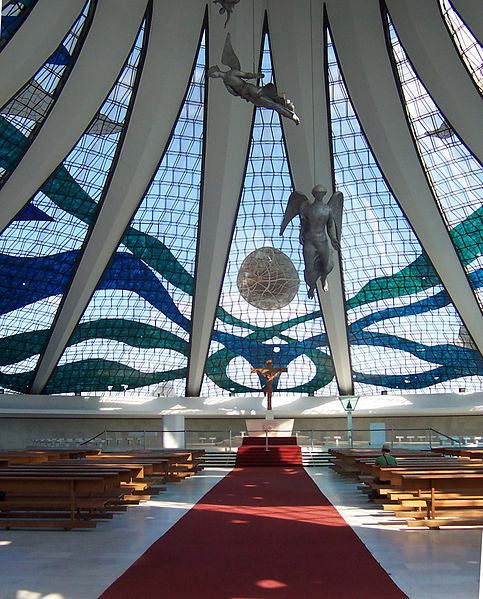
Oscar Niemeyer, Brasília Cathedral, 1962. Windows were painted in 1990 by Marianne Peretti.

So, that’s what happened. The windows of the cathedral were stained in 1990, which I think completely altered the “feel” and aesthetic of this structure. This building can no longer function as a neutral, modernist structure. The windows draw too much attention to the architecture (and even the architectural framework) of the structure to maintain the aesthetic that Niemeyer originally planned. Instead, I think that the colored windows have turned the interior of the building into a postmodern space. The lines and colors highlight the architecture and setting, so that the visitor is continually aware of his/her setting and context.

Do I think that the colored windows are a bad thing? No, not necessarily. I think the colors and designs are pretty. And, in many ways, I think that the stained glass windows are much more appropriate in today’s postmodern world. But I do think it’s interesting how the modernist aesthetic (and the original intention of the architect) was changed with just a little bit of color.

1 See Leopoldo Castedo, The Baroque Prevalence in Brazilian Art, (New York: Charles Frank Publications, 1964). For one discussion on the “love of the curve,” see p. 118.

2 This idea of “invisible” architecture as part of the modernist movement has been explored by scholars, including Panayotis Tournikiotis, who discussed how modernist “architecture is a synthesis of visual and invisible elements.” I think this idea is also easily explained with the “white cube” modernist gallery space, which is intended to be neutral and highlight the works on display (instead of drawing attention to the architecture and surroundings).

— 10 Comments

Ancient Greeks and Romans Broke their Pediments

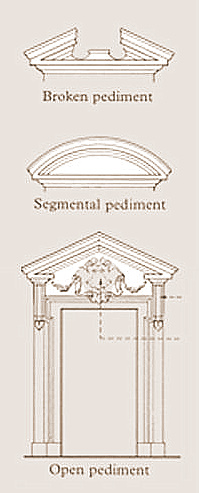
Diagram of broken, segmental (rounded) and open pediments

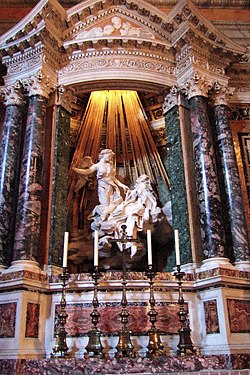
Like other Baroque art historians, I love the broken pediment as an architectural feature. A broken pediment is  ”broken” at the apex of a triangular pediment. I usually don’t differentiate between the “open” and “broken” pediment when I teach by students about these features, but I know that many architectural historians choose to differentiate between the two. An “open” pediment refers to when the base of the pediment has been removed (or “opened,”). One of my favorite broken pediments from the Baroque period (which actually has been broken, opened, and also shifted backward) is found in the Cornaro Chapel, designed by the artist Bernini (1645-1652).

Both open and broken pediments were popular in Baroque art. Baroque scholars love these kinds of pediments; they serve as good examples of how 17th century architects added a little bit more dynamism and movement into their architectural features (in contrast to the harmony and symmetry that characterized much of the architecture of the Renaissance).1

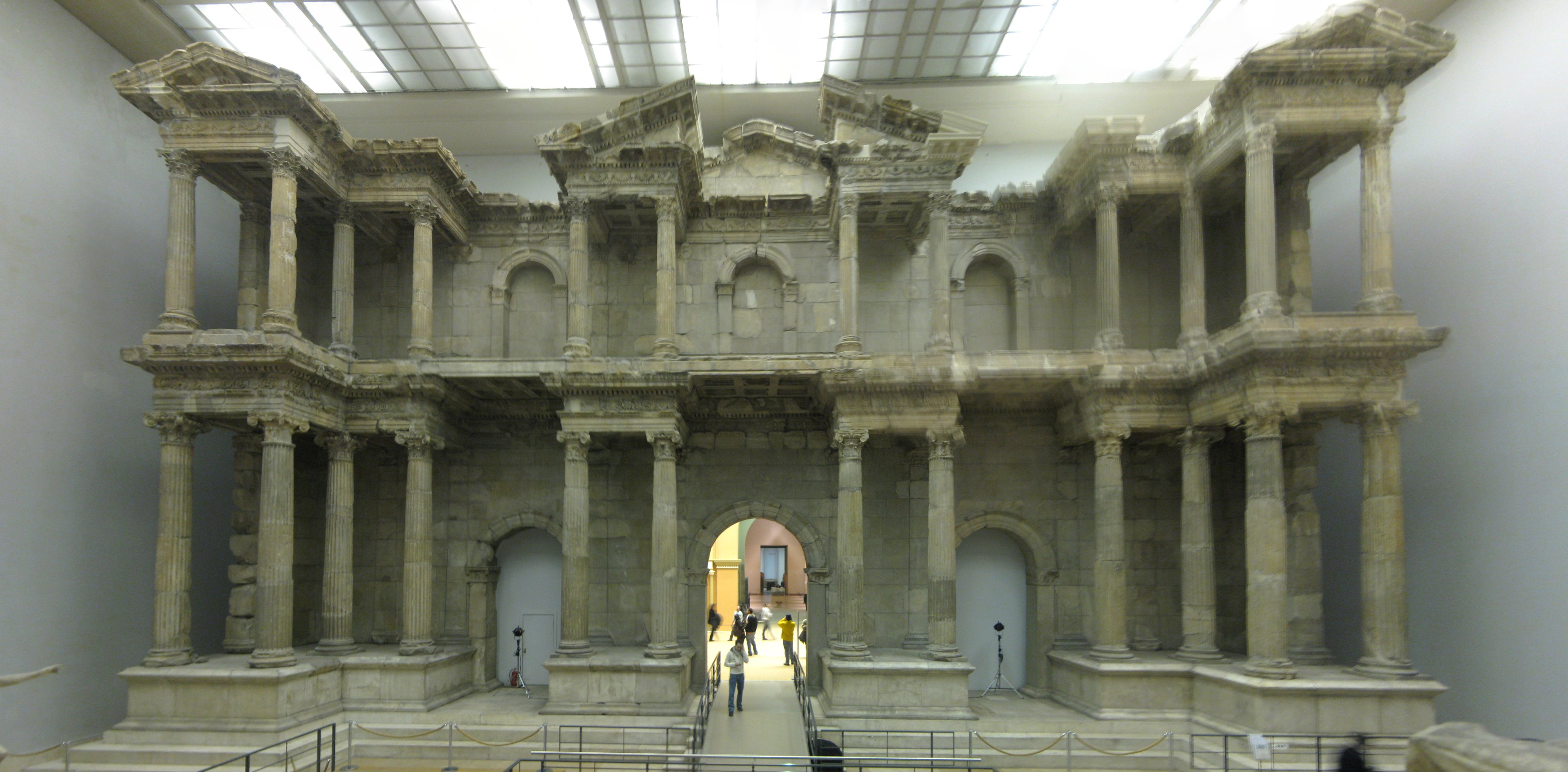
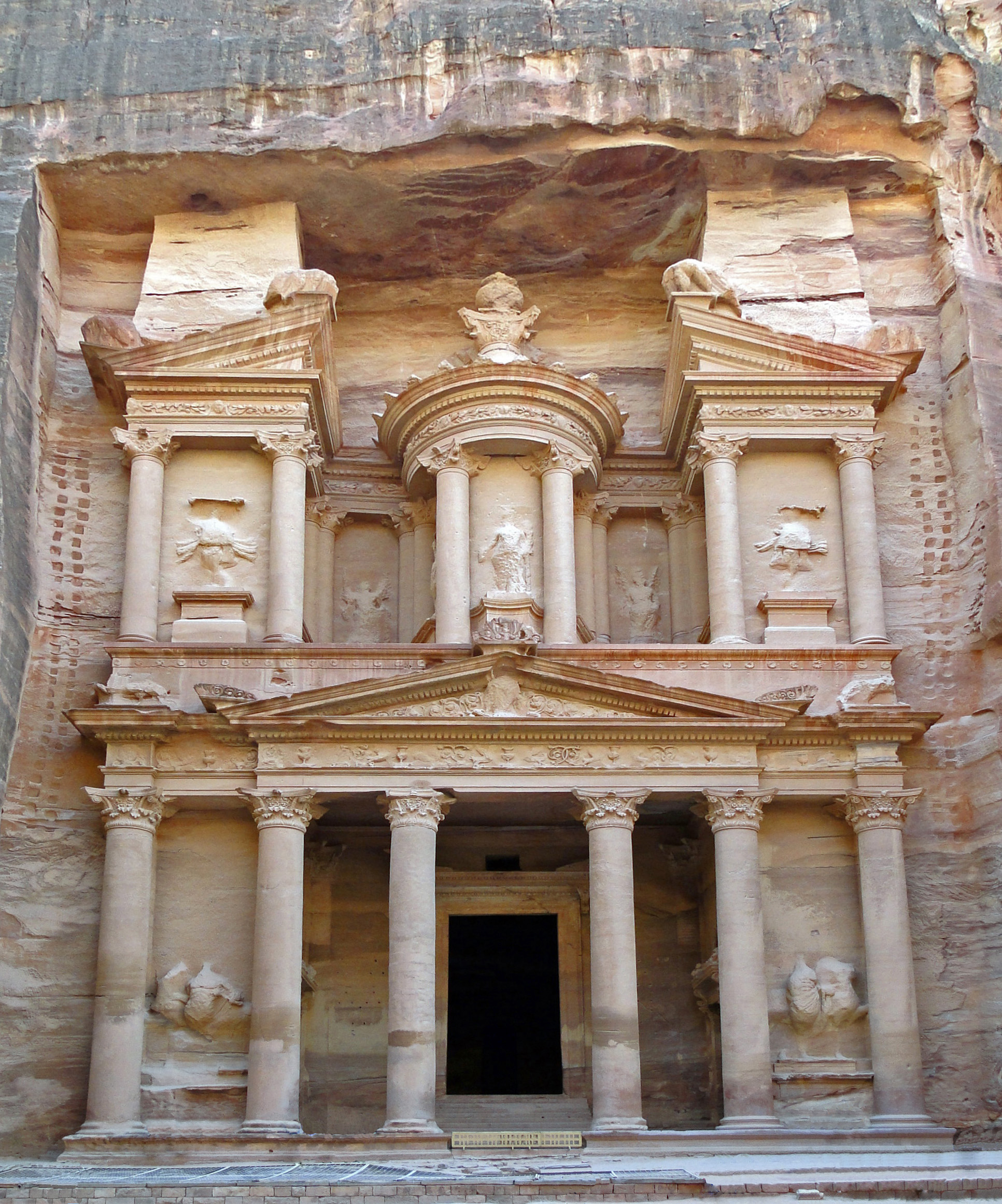
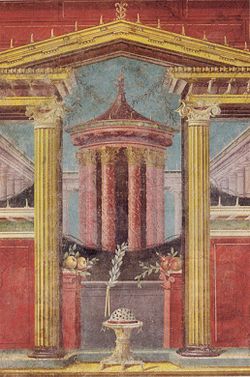
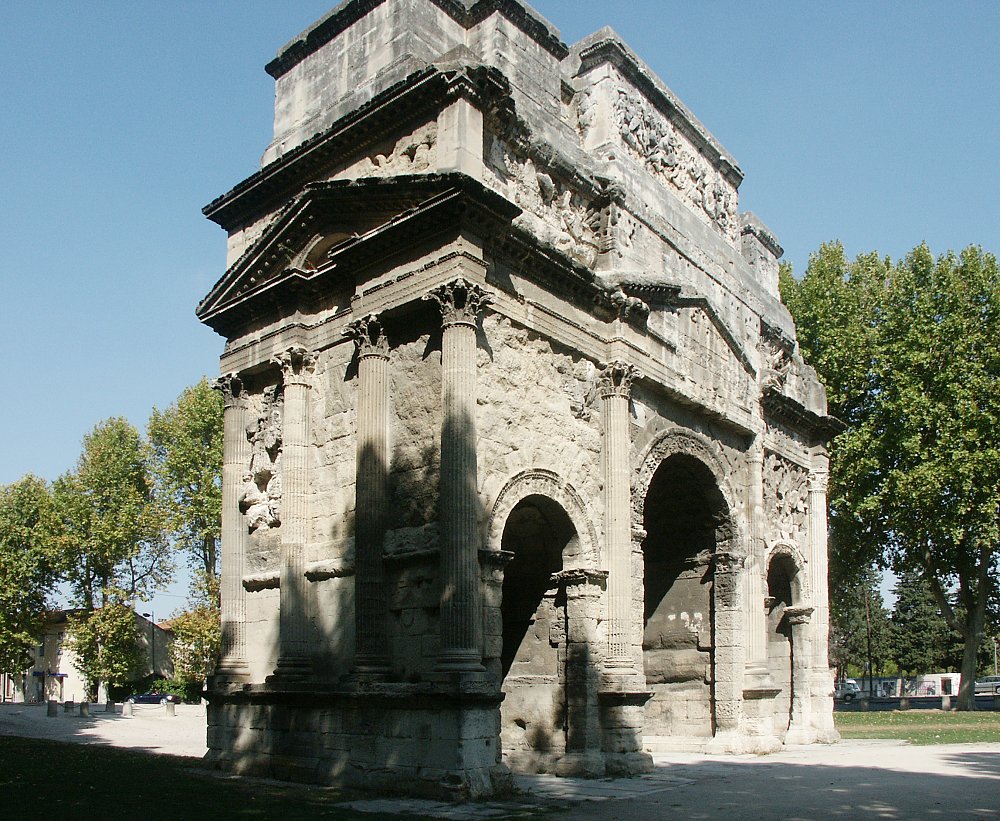
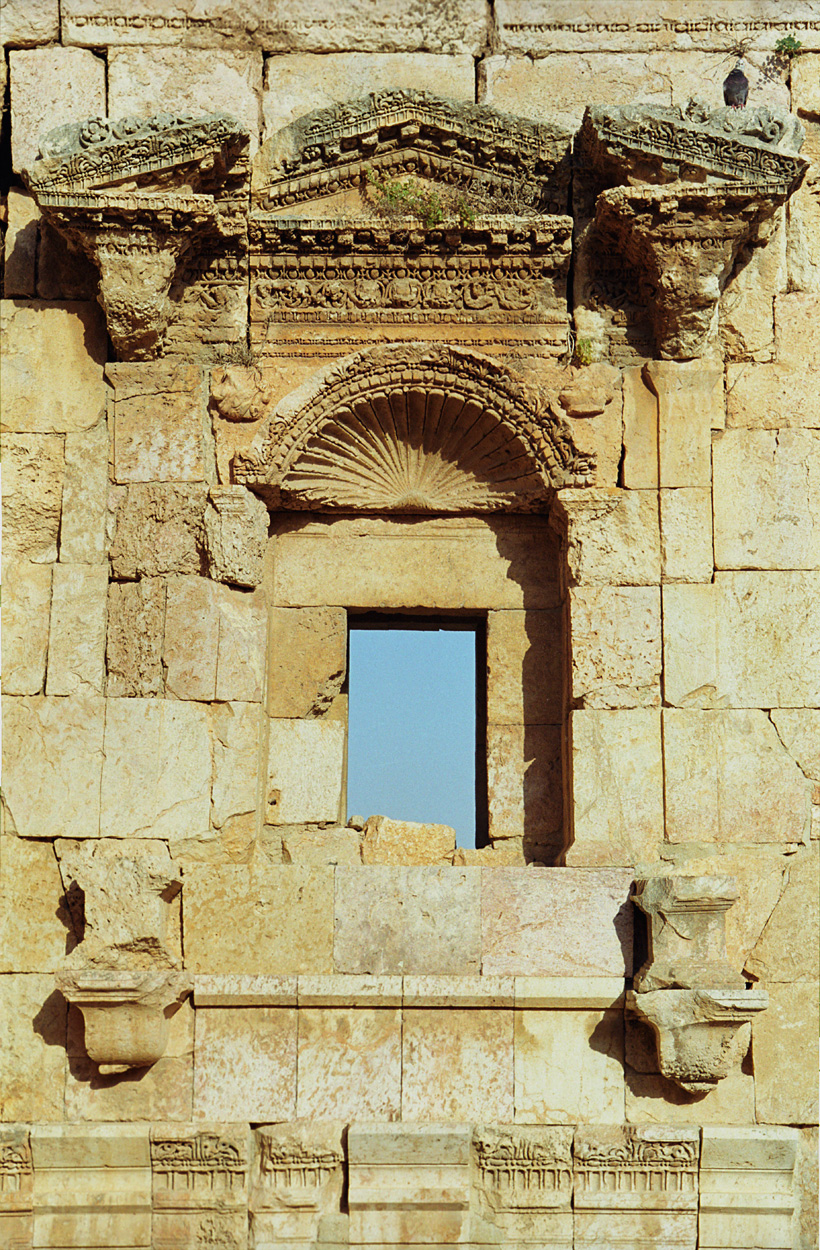
But I think that it’s hard for Baroque scholars to remember sometimes that the idea of segmenting pediments was not developed during the Baroque period. In fact, the broken and/or open pediment existed in ancient Rome and Hellenistic architecture from Alexandria.2 Unfortunately, not many extant examples of architecture survive from Alexandria, so scholars need to look to Roman art that copied Alexandrian architecture, such as the Market Gate of Miletus, Treasury at Petra, and Pompeiian wall paintings (all shown below).

I often teach my students about how the Greek Classical period is similar to the art of the Renaissance, and how the Hellenistic period is similar to the art of the Baroque period. The broken pediment in Hellenistic architecture is a further manifestation of this fact. It’s also interesting to see that the Romans picked up on this architectural feature that would probably have been conceived as “distorted” by Greeks who lived during what has been termed the “High Classical” period. In this light, the broken pediment is another manifestation of how Roman architecture was interested in the re-invention of Classical Greek architecture. No wonder they latched onto the Hellenistic invention of the broken pediment.

Here are some examples of broken pediments that appear in ancient Roman art:

Market Gate of Miletus, 2nd century CE. Currently located in the Pergamon Museum (Berlin). Image courtesy of Thorsten Hartmann via Wikipedia.

Facade Al-Khazneh (The Treasury), Petra, Jordan, 2nd century CE. Image courtesy of Bernard Gagnon on Wikipedia.

Detail of second style wall paintin from cubiculum M of the Villa of Publius Fannius Synistor, Boscoreale, Italy, ca. 50-40 BCE

Arch of Tiberius, ca. 26 C.E. (rebuilt around core of earlier monument, ca. 30 B.C.E.), Orange, France

Broken pediment from Temple of Artemis, Jerash, Jordan, c. 150 CE. Image courtesy of Jerzy Strzelecki via Wikipedia.

What are your favorite examples of the broken (or open) pediment in architecture?

1 That being said, there are examples of the broken pediment that exist in Late Renaissance architecture. For example, Antonio da Sangallo the Younger employed broken pediments on the top story of the façade of the Palazzo Farnese (ca. 1530-1546).

2 See Judith McKenzie, “The Architecture of Alexandria and Egypt, 300 BC to AD 700, Volume 63″ (New Haven: Yale University Press, 2007), 105. Source available online here. See also Judith McKenzie, “Alexandra and the Origins of Baroque Architecture,” available online here. The latter citation also includes a discussion of how the earliest surviving examples of the segmental pediment (a rounded, semi-circular pediment) are found in Alexandrian architecture.

— 9 Comments

“Masculine” Civil Architecture in Colonial Brazil

This quarter I am lucky enough to teach a course on Brazilian colonial art. There are hardly any undergraduate courses in the United States that touch on Brazilian art, and I feel really lucky to work at a university that encourages students to expand their interests to include various global topics.

This week I am going to be presenting to my students some of my own research and thoughts on the civil architecture that was constructed in colonial Brazil. Through my own observations, I have noticed that a lot of the civil architecture is constructed with columns and pilasters from the Doric order (an architectural style that developed in ancient Greece).

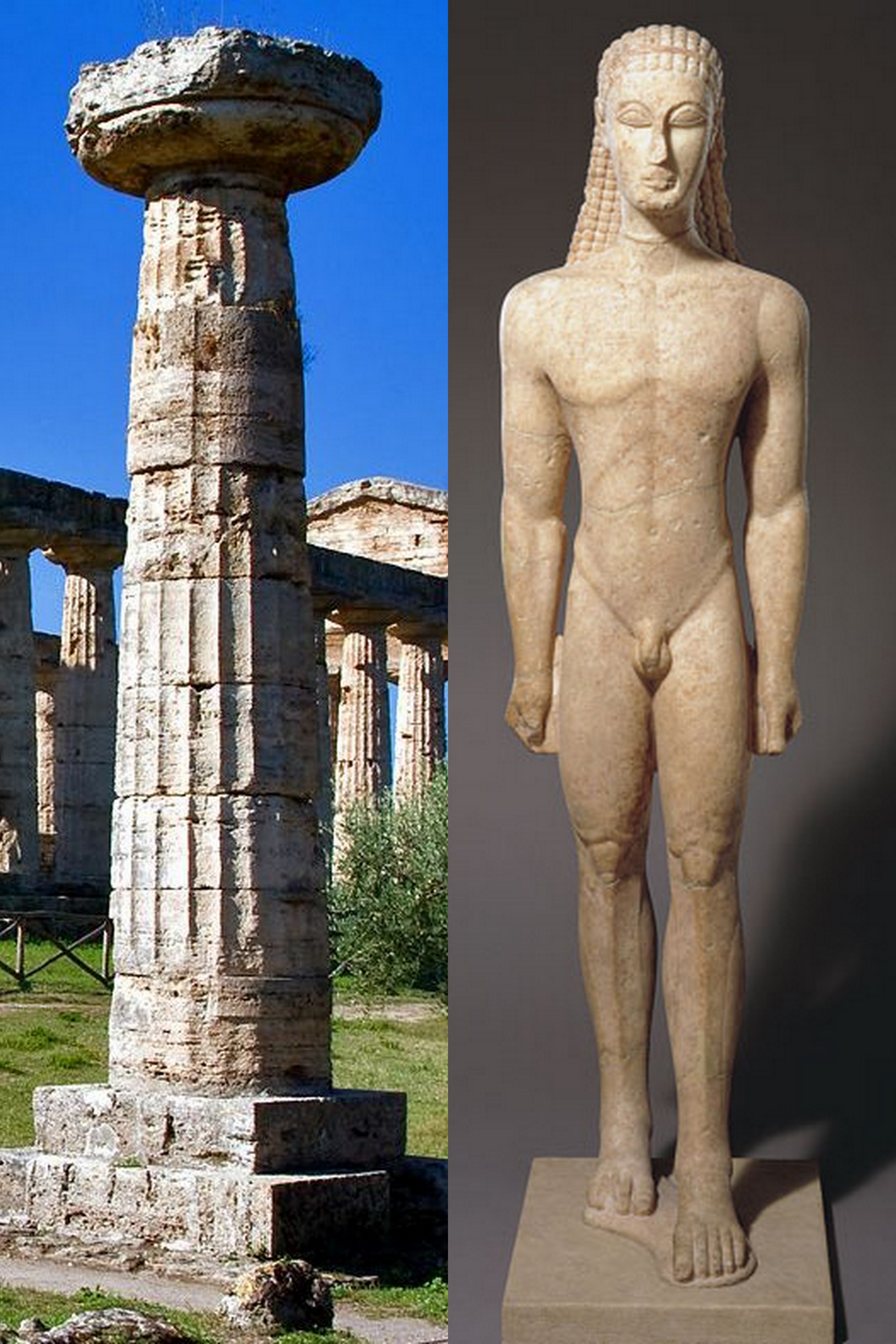
Example of the Doric order with the plain, unadorned capital, as it appears on both columns and pilasters (rectangular columns embedded into a wall).

I think that this popularity of the Doric order especially interesting, since the Doric order has long been associated as a “masculine architectural style.” In fact, the Roman historian Vitruvius compared the Doric order to the proportions of a man. In his influential writing, On Architecture, Vitruvius explained that the proportions of a man’s foot (in relation to the man’s height) were used to form the Doric order. In contrast, Vitruvius continues to explain that the Ionic order resembles a female, and the Corinthian order can be compared to a slender virgin.1

So, what does this have to do with civil architecture in Brazil? I think that the usage of the Doric order might have had symbolic significance for the European colonists, some of whom probably were familiar with Vitruvius’ text. This “masculine” Doric order would have been in opposition to the Latin American soil, which was considered to have intrinsically female attributes. Annette Kolodny has explored how European colonizers viewed the Americas as having essentially female attributes (“land as woman”), and compared described the American continent to a virgin (“Virgin Beauties”).2 If the American land embodies the qualities that are already interpreted to be part of the Ionic (female) and Corinthian (virgin) orders, then perhaps the Doric order seemed like better point of visual contrast for colonial architecture. But I think that the Doric order is associated with much more than a mere visual contrast to the land. In a way, the rigid, masculine Doric order of the invading colonizers can be interpreted as a masculine European domination over the female Americas.

Muncipal Building (Casa de Camara), Salvador, Brazil, 17th century. Restored in 1960s

This theme of architectural domination and conquest can be extended outside gender binaries, too. Previous scholars, such as Gauvin Bailey, have discussed how the classical characteristics of Latin American architecture could have been used to associate the Spanish and Portuguese with the greatness of the Greek and Roman empires. As colonizers and conquerors of the Americas, the Portuguese and Spanish were building their New World empires, following in the footsteps of their classical predecessors.Therefore, by association, government buildings could embody authority, conquest, and domination. I feel like all of those characteristics can be seen in the Municipal Building of Salvador (see image above). The classical features such as the Doric capitals, Doric pilasters and arcade all reference the glory of previous empires. I also get a sense of domination from the low-lying, horizontal structure itself: the horizontal emphasis suggests that building wants to cover (or dominate) as much surface area of colonial land as possible.

Antonio Landi, Governor's Palace at Belém do Pará, Brazil, 1771. Landi was an Italian architect who moved to Brazil in the middle of his life. Since Landi worked as a professor of architecture in Bologna, I'm fairly certain that he was familiar with Vitruvius' "masculine" interpretation of the Doric order

I also think that Doric capitals also embody a sense of authority, since it is the most austere and rigid of the classical orders. This rigidity is especially apparent to me in the Governor’s Palace at Belém do Pará (see above), where Doric-like features (suggestive of pilasters) are decorated with quoining. The rigid, rectangular quality of the quoining reinforces the strength and rigidity of the structure (and therefore the governor, by extension). Did you notice that this is another horizontal, low-lying structure that dominates as much surface area as possible?

Any other thoughts on the Doric order and colonial conquest? Civic architecture in Brazil is a very under-explored topic in scholarly research, and I’m always up for generating more conversation!

1 See Vitruvius’ “On Architecture,” (1st century BC). Text from Chapter 1 (which mentions the Greek orders) is found here.

2 For more information on the Americas being interpreted as female (or as a woman), see Annette Kolodny, “The Lay of the Land: Metaphor as Experience and History in American Life and Letters”(Chapel Hill: University of North Carolina Press, 1975), p. 4-7.

3 Gauvin Alexander Bailey, “Art of Colonial Latin America” (London: Phaidon, 2005), 43.

— 15 Comments

Versailles and France as "Art Capital" of the World

I think Versailles is a big deal. And I don’t mean that the palace of Versailles is big in terms of physical space (that fact is beyond obvious!), but I have long thought that Versailles needs to have more recognition for its role in art history – particularly in terms of why France became the art capital of the world in the 18th and 19th centuries.

Up until this point, I’ve never seen a fantastic explanation for how and why the artistic scene shifted from Italy (and Southern Europe) to France. A lot of possible ideas for this shift could be put forth, such as the establishment of the Academie de peinture et de sculpture (Paris) in 1648. Obviously, this artistic academy helped to promote art and establish France within the artistic scene, but I don’t think that this event caused Europe to focus its attention on France. Likewise, if one looks to the 18th century, it is easy to pinpoint how the establishment of the Louvre museum in 1763 was connected to France’s preeminence among the arts (not only so that artists could study art, but in terms of France becoming a major artistic attraction for tourists).

Although these are both very significant events, I don’t think that either the Louvre or French Academy was the initial cause of a major geographic shift in Europe’s artistic scene. Instead, I really think that it was the redesign of Versailles which brought France to the forefront of the European art scene. Versailles, which originally functioned as a hunting lodge, underwent a major redesign and enlargement in the 17th century. One of the major additions to the palace was begun by the architect Le Vau in 1668. Subsequent additions, remodels, and changes were made over the next several years (including he creation of the “Hall of Mirrors,” which was begun in 1678 by Hardouin-Mansart and Le Brun). Louis XIV finally moved to the palace in 1682, and eventually required his court to live at the palace as well.

Versailles was over-the-top in terms of luxury, space, and design. It was so huge and so ostentatious that it immediately attracted the attention of other countries. In fact, Versailles was so impressive that many European monarchs wanted to model their own palaces after Versailles. Subsequently, Baroque palaces popped up all over Europe. You can see a great compilation of Baroque residences here (complete with photographs). One such Versailles-inspired palace was the Würzburg Residenz, in Würzburg, Germany (1720-1744, shown above). In essence, Louis XVI became a major trend-setter with Versailles. Everyone wanted to live like him. And, consequently, I think that this is the reason that the art world moved to France. Europeans focused their attention to French art and architecture, a focus that would continue for over two centuries.

Although I don’t think that Versailles is the sole reason that the artistic scene shifted to France, I think the remodeling and establishment of court at Versailles are very pivotal points in art history. Obviously, I’m a little biased as a Baroque scholar, but I can’t overlook Versailles on this point. It’s just too big - both physically and metaphorically!

Can you think of historical events which helped to foster (or solidify the presence of) the artistic scene in France?

*Photo of Versailles courtesy of Eric Pouhier, as found on Wikipedia.

— 20 Comments

"Modern" Gingerbread House

At a Christmas party earlier today, J and I had visions of creating a 20th century gingerbread house that would look something like this:

Le Corbusier, Villa Savoye, Possy-sur-Seine, France, 1929
(image via Wikipedia (ValueYou), under the GNU Free Documentation License, v. 1.3)

Or this:

Frank Lloyd Wright, Kaufmann House (Fallingwater), Bear Run, Pennsylvania, 1936-39

Needless to say, our final product was not nearly as fancy:


Let’s just hope that our gingerbread house is as architecturally sound as the Le Corbusier and Wright buildings. Or even more architecturally sound, I should say: Frank Lloyd Wright’s building was in danger of collapse at one point. The terraces of Fallingwater began to droop over time and were considered unstable. In addition, “long-term stress on the main level’s beams resulted in cracks in the beams, causing the floors to sag.”1 The building was restored in 2002, as part of an $11.5 million restoration project.

You know, maybe it’s a little encouraging to know that even Frank Lloyd Wright wasn’t a perfect architect. Then maybe I won’t be disappointed if my house has collapsed by tomorrow morning!

(If anyone ends up building another gingerbread house that was inspired by a great architectural work, let me know! I’d love to see a picture. I dare someone to try and build a gingerbread house that based off of Frank Gehry’s Guggenheim Bilbao Museo.)

1 Fred S. Kleiner and Christin J. Mamiya, Gardner’s Art Through the Ages, 12th ed., vol. 2 (Belmont, CA: Wadsworth, 2005), 1017.

— 11 Comments

About

This blog focuses on making Western art history accessible and interesting to all types of audiences: art historians, students, and anyone else who is curious about art. Alberti’s Window is maintained by Monica Bowen, an art historian and professor.