Category

Early Christian

Bacchus/Dionysus in Classical Art

I was recently asked a question something like, “If you had to choose a favorite god or goddess from ancient Greek/Roman mythology, who would it be?” I quickly answered Bacchus (Dionysus), the god of wine. It’s not because I’m into bacchanalian parties (I don’t even drink!) or Dionysiac cults, but Bacchus just seems like he’d be a really entertaining friend. I bet that guy can be funny-on-command.

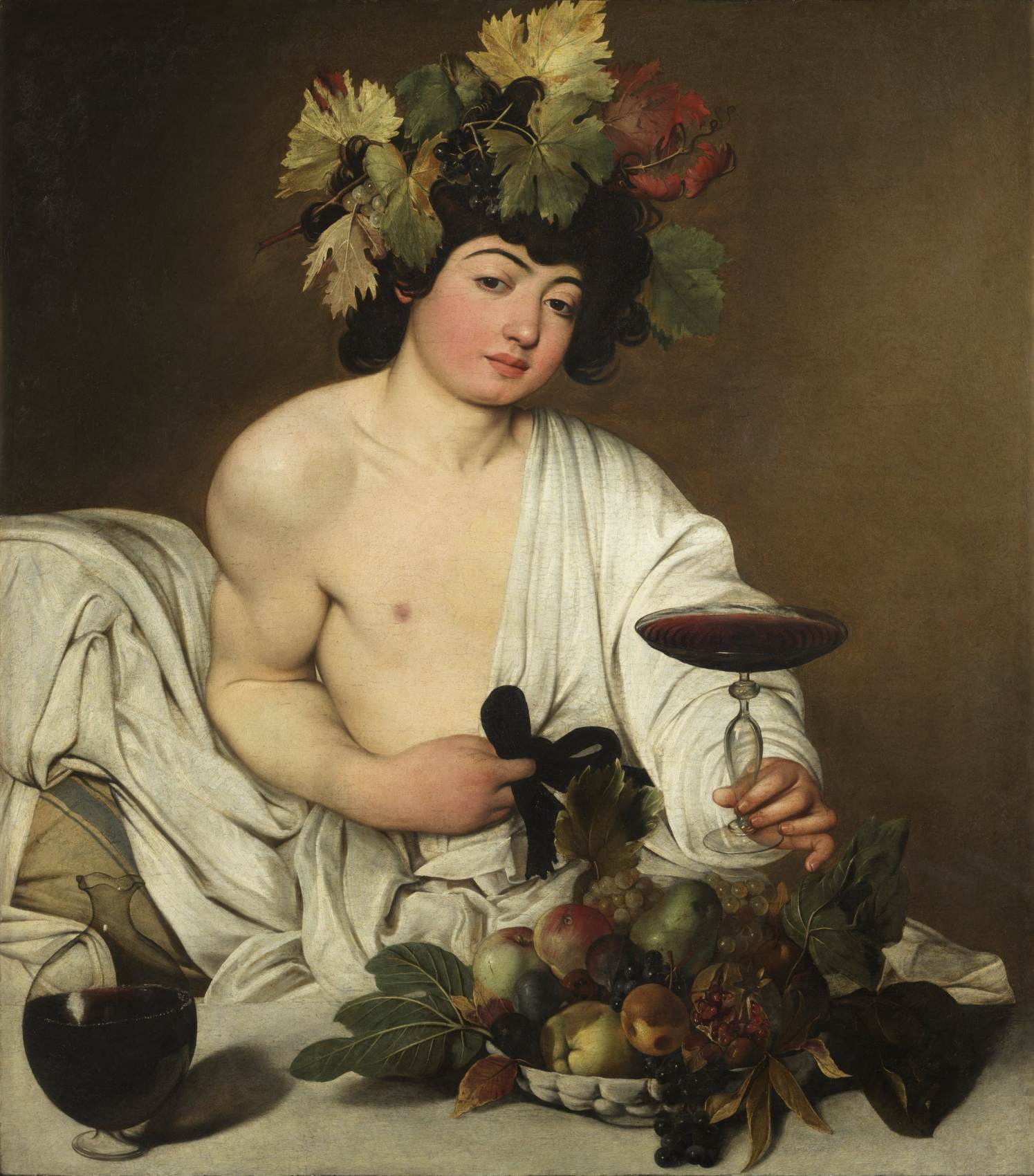
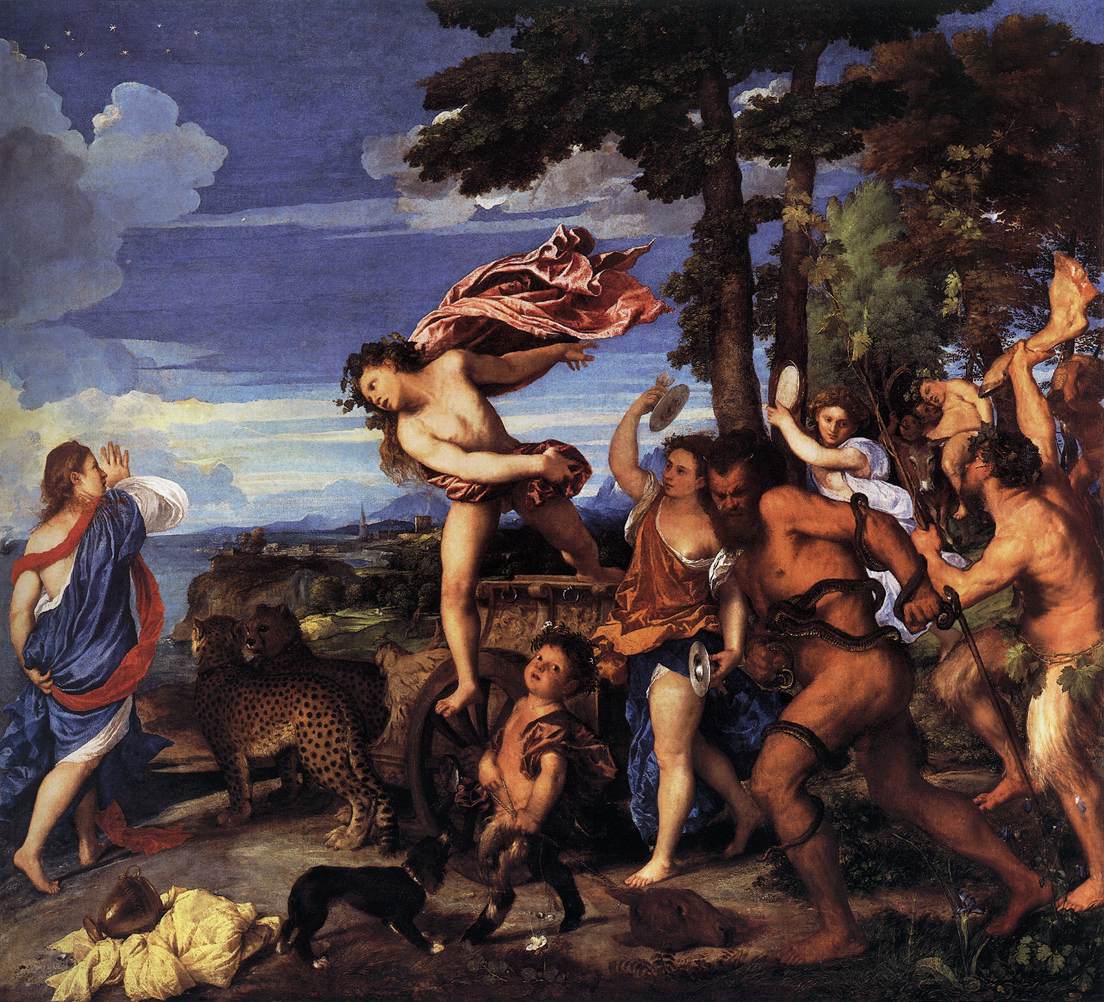
Anyhow, I started to think of all of the depictions of Bacchus/Dionysus in art. Since my speciality is in 17th century art, it’s not surprising that I first thought of art created in the Renaissance/Baroque periods: Michelangelo’s Bacchus (1497), Caravaggio’s Bacchus (c. 1596), Caravaggio’s Sick Bacchus (c. 1593), Velazquez’ The Triumph of Bacchus (c. 1629; see detail above), and Titian’s Bacchus and Ariadne (1520-22). While researching for this post, I also came across a fun depiction of a hefty Bacchus (1638-40) by Rubens. I think it might be my new favorite Bacchus painting, partially because the god’s face and girth remind me of a physics teacher from my old high school.

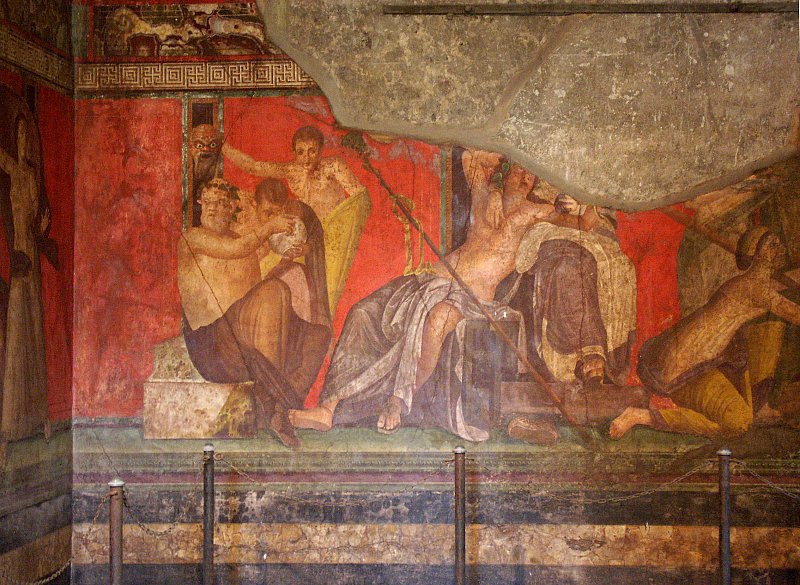
But what about ancient art? What about depictions of Bacchus/Dionysus by the Greeks and Romans themselves? I had a hard time thinking of many examples, which is partially because it’s outside my realm of expertise. I did think of three examples, though. Praxiteles’ Hermes and the Infant Dionysus (marble copy after an original of 340 BC, shown right) would have been fun to see in its pre-damaged state, since Hermes was originally dangling a bunch of grapes to tease the infant god of the vine. I also thought of the Dionysiac Mystery Frieze (Villa of the Mysteries, Pompeii, Italy, ca. 60-50 BC) and figure from the Parthenon which might be Dionysus (ca. 438-432 BC). These depictions are are a little disappointing though, since they are both damaged. (P.S. Can anyone identify the head with the bulging eyeballs on the left of the Dionysiac wall? I can’t figure it out.)

With only those few examples in mind, I began a quest to familiarize myself with depictions of Bacchus/Dionysus in classical art. I ended up finding a couple of fun examples that I thought I’d share:

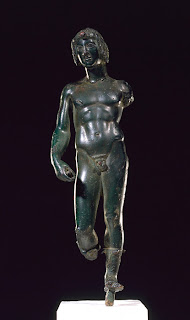
Dionysus (2nd century AD; Roman copy after Hellenistic model, Louvre, Paris)

Dionysus (460 BCE; Louvre, Paris)
This is thought to be one of the earliest depictions of Dionysus as a young man (see here)

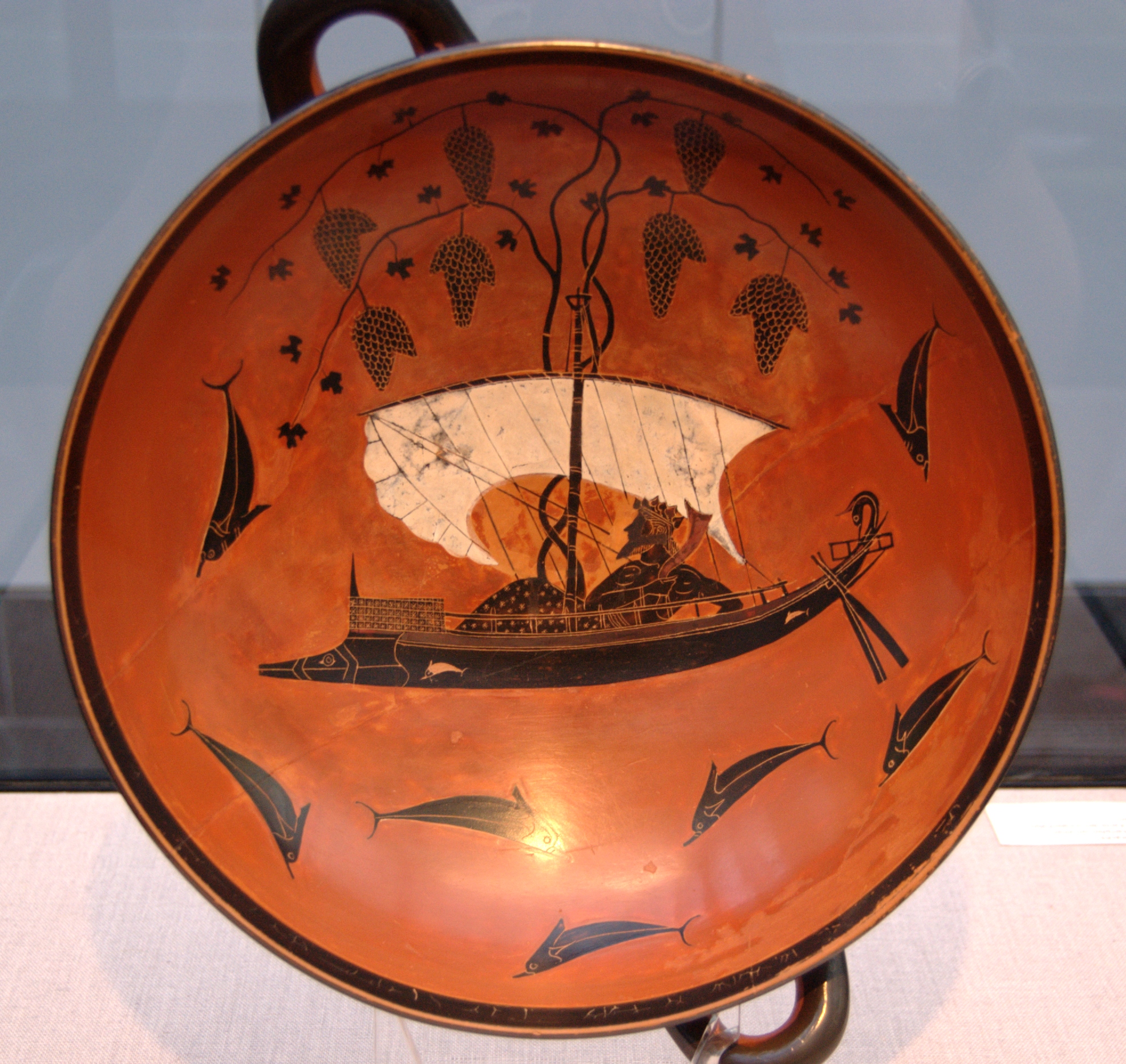
Exekias, Dionysus in a Ship, Sailing among Dolphins (Attic black-figure kylix; ca. 530 BC; Vulci)
I actually remember seeing this vase in a course on ancient Greek art. It’s a good example of how early Christians picked up on the reclining figure of Dionysus and reused that imagery in the figure of Jonah (see bottom scene from the ceiling painting in the Catacomb of Saints Peter and Marcellinus, Rome, Italy, early 4th century)

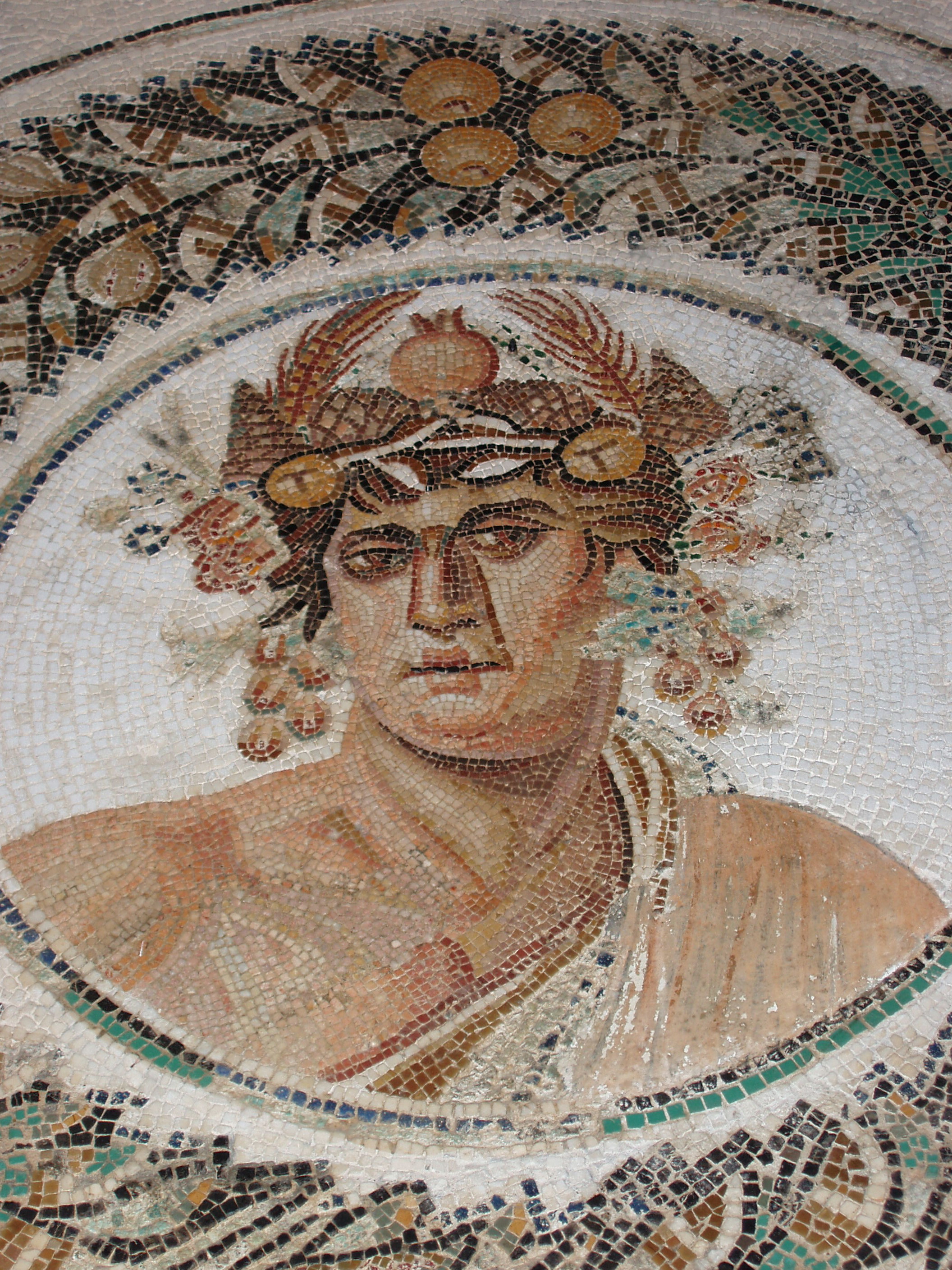
Bacchus, (3rd century, Roman mosaic, El Jem Museum, Tunisia)

The Birth of Dionysus (ca. 405-385 BC, Greek, National Archeological Museum in Taranto, Italy)
According to mythology, Dionysus was born out of Zeus’ thigh. I love this vase painting – check out Dionysus’ cute lil’ postnatal wreath!

There are a lot more depictions of Bacchus/Dionysus than the few I’ve shown here. Do you have a favorite depiction of the god of wine? If you had to pick a favorite god or goddess from classical mythology, who would it be?
— 6 Comments

St. Paul: His Remains and a Catacomb Painting

I just read this post which informed me that a new catacomb painting of St. Paul has been found in Rome. This is the oldest extant fresco of St. Paul, which dates to the 4th century AD. Plus, this discovery is also exciting because of all of the images of St. Paul from the Early Christian period, this one is in the best condition.

This fresco was discovered in the Catacomb of St. Thekla. The catacomb is near the place where Paul was reportedly buried (the Basilica of St Paul’s Outside-the-Walls in Rome). This fresco was instantly recognized as St. Paul since the thin face and dark beard were typical iconographic features for the saint in the 4th century.

You can read more about the fresco’s discovery in yesterday’s Telegraph article. Along these same lines, today’s Telegraph article discusses test results which confirm that the remains located in St. Paul’s Outside-the-Walls belong to St. Paul. (Well, probably. The remains have been confirmed to date from the first or second century.) It appears that the finding of this fresco prompted officials to test the remains inside the sarcophagus.

Pretty cool stuff. I think it’s especially interesting that this fresco was restored using a laser. Technology is helping archaeologists and restorers do some amazing stuff. If lasers were never invented, do you think this fresco would have been lost forever?

— 2 Comments

The Immortal Peacock

According to ancient legend, the flesh of the peacock is incapable of decay. Yep, that’s right. It was thought that a peacock’s body would never rot. It would be really cool if this was true, but it isn’t. This myth was propagated by early writers (see here for an interesting example in Augustine’s City of God).1 As a result of this myth, the peacock has been associated with immortality in Christian art. Furthermore, because male peacocks shed and regrow their plumage each year, the peacock also is associated with resurrection.

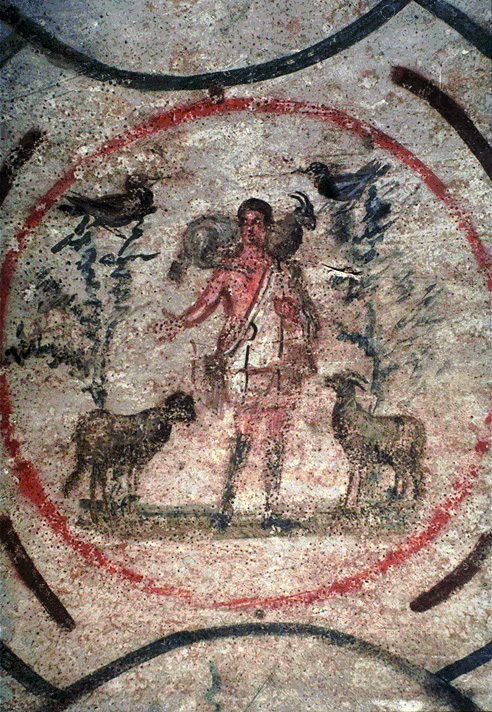
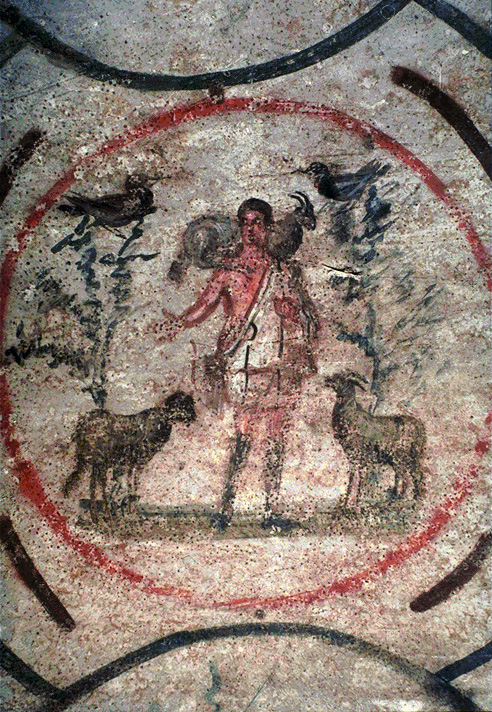
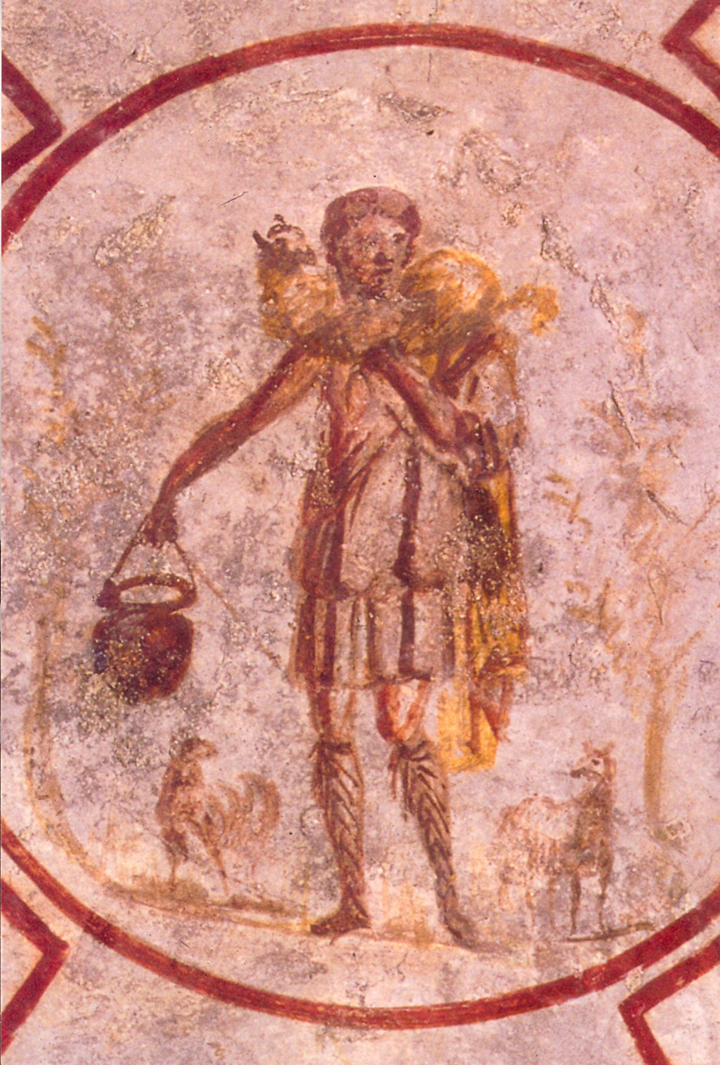
Peacocks have appeared in Christian art for centuries. Some of the earthen lamps used by early Christians were decorated with peacocks.2 One of the earliest paintings of a”Christian” peacock decorates the ceiling painting in the catacomb of Priscilla* (3rd century AD, Rome, Italy; the peacock is located in the lunette above the “Life of Priscilla” scene). Since catacombs were the tombs for early Christians, it is appropriate that a depiction of a peacock be included here, due to this assocation with resurrection and immortality. I think it is especially interesting that the peacock is located near a depiction of Christ, since Christ is also associated with resurrection and immortality (Christ is shown as the Good Shepherd in the central, circular frame).

Thousands of years later, in the Renaissance, Fra Angelio and Fra Filippo Lippi still included the peacock in their religious art (this is a detail from the Adoration of the Magi, c. 1440/1460). Perched on the stable above the Christ child, the peacock watches the wise men bring gifts to the baby. As a complement to the gold, frankincense, and myrrh, the peacock symbolizes the gift of immortality that is offered by Christianity.3

I know that peacocks have both positive and negative associations in other contexts and cultures. In America, it could be argued that peacocks are most commonly associated with vanity. I think it’s fun to look at peacocks in a different light, as a symbol of immortality.

1 To see some other examples of early writings (and a great image of a peacock from a medieval bestiary, see here).

2 “Roman Catacombs,” in The Catholic Encyclopedia (2009), accessed 18 May 2009. Found online here.

3 A complete view of the painting (and more information about it) can be found here.

*Catacomb of Priscilla image courtesy batigolix on Flickr.

— 7 Comments

The Virgin Mary and the Color Purple

In the world of art, the Virgin Mary most often is depicted in blue or red clothing. I am interested, however, in the associations that Mary has with the color purple. It is not terribly common to see Mary depicted in purple, even though there is interesting symbolism and iconography associated with that color and the Virgin. One depiction of Mary in purple (borderline indigo?) that I particularly like is an encaustic icon from the 6th century (Virgin and Child with Saints Theodore and George, St. Catherine, Sinai, shown on left). A recent conversation with my friend Jon has caused me to think about the color purple and depictions of the Annunciation (the moment in scripture when the Angel Gabriel “announces” to Mary her divine calling).

An Early Christian apocryphal text links depictions of the Annunciation with the color purple. This text, the Protoevangelium of James, dates at least to the 2nd century AD. It describes Mary as one of the pure virgins who was chosen to help spin the veil for the temple. The lot of spinning the “true purple and the scarlet” threads fell to Mary; “and she took the scarlet, and span it.”1

According to the Protoevangelium of James, the angel appeared to Mary twice, once while she was fetching water with a pitcher and again when she returned to her room to resume spinning.2Although the validity of this apocryphal text has been questioned, the story has led to many representations of the Virgin spinning. Many of these representations are pre-Carolingian or Byzantine, although the Eastern church still continues to depict Mary in this fashion.3 The image below is from a 12th century icon (Tretiakov Gallery, Moscow). The arrival of the angel has interrupted Mary’s spinning; she holds a distaff and the true purple thread in her lower hand. Not only does Mary hold this thread, however, but her cloak is also the same color.

I really like Lawrence Cross’ interpretation of this piece. He writes that Mary is seen “holding the distaff and the scarlet and true purple thread. The power of the symbol is now clear. In her consent [to her divine calling] and conception, she herself has become the new veil of the temple of God. The scarlet and the true purple is the symbol of her motherhood through which the divine Logos will become man.”4 I think the true purple cloak wrapped around Mary is a visual assertion of Mary’s divine role. I also think it could be a visual manifestation of the Holy Spirit descending upon Mary, especially since her conception is referenced by the small Christ child that appears within the cloak.5 It is especially interesting that the small Christ child is the same color as Mary’s cloak, as if He is covered by the Holy Spirit or by the veil of Mary’s body.

The color scarlet is also a fitting color for Mary and the Christ Child, since the royal color asserts that Mary and Christ are part of King David’s lineage.6 What depictions of Mary spinning/in purple do you like?

1 Protoevangelium of James 1:10-12. Text can be found online here. There is an interesting mosaic in the Chora Church (Kariye Djami) which depicts a priest handing a skein of the “true purple and scarlet” to Mary (shown on the right of the linked image).

2 In an article regarding European/Catholic art, Margaretta Salinger writes, “The author’s emphasis on [Mary] taking the pitcher, to go to the well, and then later ‘filled with trembling,’ returning to her house and setting it down, suggests that this text accounts for the ever present ewer serving as a vase in representations of the Annunciation.” See Margaretta Salinger, “An Annunciation by Gerard David,” The Metropolitan Museum of Art Bulletin, New Series 9, no. 9 (May, 1951): 225.

3 In later periods, the theme of spinning was replaced with an emphasis on learning; the Virgin was often depicted reading a book. David Cartlidge discusses this change in subject matter and cites the apocryphal text, “No one could be found better instructed than [Mary] in the law of God and singing the songs of David” (Pseudo-Matthew 6). See David R. Cartlidge, Art and the Christian Apocrypha, (London: Routledge, 2001), 80. Full text can be read online here.

4 Lawrence Cross, “St. Mary in the Christian East,” Australian EJournal of Theology, no. 9 (March 2007), accessed online here.

5 A fifth-century analogy by the African monk Arnobius the Younger furthers this idea between Mary, the color purple, and the Holy Spirit. “Just as wool, to be transformed into royal purple cloth, must absorb the blood of a purple shellfish (conchylium), so the Virgin Mary absorbed the purple color of divinity when the Holy Spirit descended upon her and she was covered with a shadow of the Most High.” See Luigi Gambero, Mary in the Middle Ages: The Blessed Virgin Mary in the Thought of Medieval Latin Theologians (San Francisco: Ignatius Press, 2005) 61. Citation can be read online here.

6 Maria Evangelatou, “The Purple Thread of the Flesh: The Theological Connotations of a Narrative Iconographic Element in Byzantine Images of the Annunciation” in Icon and Word: The Power of Images in Byzantium: Studies Presented to Robin Cormack, Antony Eastmond, Liz James, and Robin Cormack, eds. (Surrey, England: Ashgate Publishing, Ltd., 2003), 262. Citation found online here.
— 3 Comments

About

This blog focuses on making Western art history accessible and interesting to all types of audiences: art historians, students, and anyone else who is curious about art. Alberti’s Window is maintained by Monica Bowen, an art historian and professor.